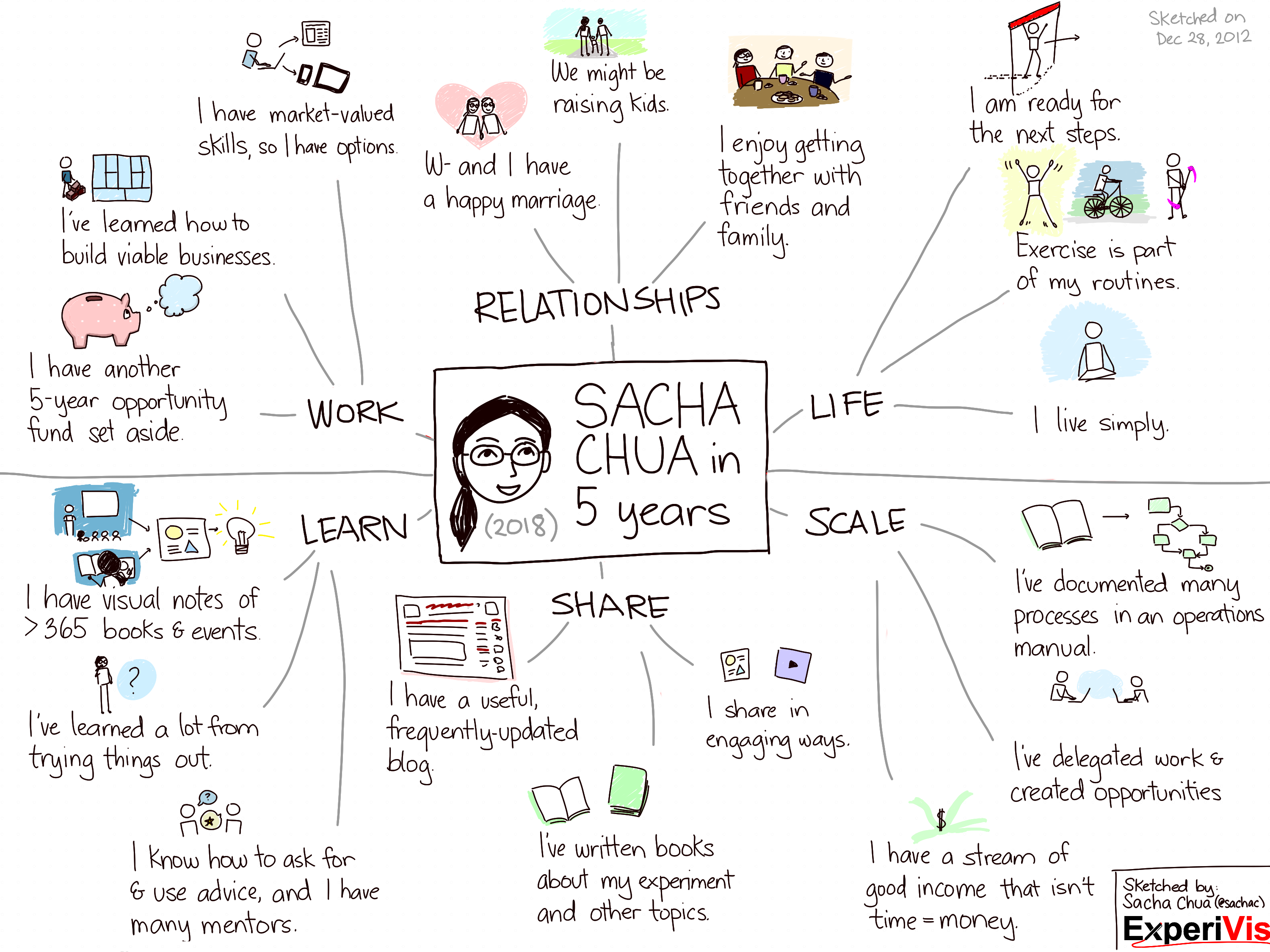
It’s almost time to make my personal business commitments. It’s a great time to think about what I want to do with IBM.
There are the existing goals and commitments that come down through the management chain. I want to work with IBM on making those happen because I believe in what we’re doing, and I believe that the work will help me grow. Saying yes to those is easy.
And then there’s the really important question of what I want to do with IBM, if IBM can be this platform that lets me make a bigger difference. What I want to do with IBM is to build a world where work really does flow like water, where people can do and be their best wherever they are.
If we can figure out how to work with the system—if we can figure out how to align and support even a fraction of the energy and talent in this 400,000-strong organization and our extended ecosystem—imagine how much we can help change the world and how much better we’ll work. Look at how much the world has already changed in the past few decades. Wouldn’t it be amazing to find out what we could do if we could help people fully use their talents?
So what does that look like, long-term?
- People can easily and effectively collaborate with people around the world. This means knowing how to reach out and find resources, work together, and deliver results. Challenge: Lots of growing pains right now, especially as work moves around the world and companies shift towards more diverse workforces. People don’t know which tools to use when, and we’re still figuring out how to work together.
- People can work on what they’re good at and passionate about. We can get better at connecting people with opportunities and adapting to changing needs.
- People learn and share as much as they can. Learning from other people and sharing what we’re learning becomes a natural part of the way we work.
- People work well. We communicate clearly, without too much jargon. We communicate as people, not hiding behind passive words or inhuman abstractions. We connect with each other.
How can I help make this real?
- Consulting: I can help organizations, communities, teams, and individuals change the way they work by helping them learn about tools, practices, and success stories. I can coach people on how to develop new practices. I can look for what people are doing well, document those practices, and explore how they can work even better. If I can get really good at consulting, I can help people identify the strengths that they can build on, recognize and share what works, and plan how to address the challenges that get in the way of collaboration.
- Practising relentless improvement: I’m good at looking for small ways to improve processes and building tools to help people work more effectively. If I can get really good at relentless improvement, I’ll be able to identify key changes that help people work much more effectively, shape a culture where people love practising relentless improvement themselves, and formalize and share improvements through processes and tools.
- Learning and sharing: I’m good at learning tons from people around me and sharing what I’m learning through presentations, blog posts, and other ways to scale up the knowledge. If I can get really good at learning and sharing, I’ll be able to inspire people to learn and share, map out what people need to know, share lots of insights, and organize it so that people can find what they need.
- Connecting: I’m good at connecting people with other people, resources, and tools. This is partly because of a wide network and broad exposure, partly because I deliberately look for ways I can connect people, and partly because I work on taking notes and thinking of associations. If I can get really good at connecting, I’ll be able to not only help people build on others’ work instead of duplicating effort, but also push the network knowledge into the organization so that people can find relevant people and resources without being bottle-necked by connectors. I could also get really good at connecting and then use this to help clients understand complex technical systems.
- Showing the big picture: I’m good at showing people how they fit into the big picture, why their work matters, what else is going on, and what they can do next to grow. If I can get really good at helping people see that, I’ll be able to shape people’s motivation to work, help people stay passionate and engaged, and show what the next steps are.
It’s interesting to look at this list. Although I enjoy building systems and developing my technical skills, I think I’ll get closer to what I want to do by focusing on the business side. My technical aspect helps me because I can automate tasks, crunch numbers, analyze information, and build tools for remembering things. For the kinds of challenges I’m really curious in exploring, though, technology isn’t the limiting factor. Technology-wise, things change really quickly, and I’m confident that people can build what we need. What we’re limited by is our ability to change and learn.
What does that look like in the short- and medium-term? What can I work towards for my career?
One of the quirks about planning my career is that I don’t need to work towards a specific position in order to make the kind of difference I want to make. I can already work on this from where I am. My current role already involves all of those capabilities to some extent, and I also contribute outside my official job role. My work with Innovation Discovery helps me learn about all sorts of interesting people and interesting projects. My mentors teach me about consulting skills and facilitation techniques. My tasks provide me with plenty of opportunities for relentless improvement. Learning and sharing, connecting people across the organization, helping people see the big picture and the next steps—these are things I do for work and fun.
So, how can I make the future even better than today?
- Better alignment: The more closely my goals and my team’s goals are aligned, the more resources I can tap to make things happen, and the better IBM and our clients can take advantage of what I’m good at.
- Immersion: If I focus on developing one capability (or a set of related ones), I can create and share more value faster than if I spread myself out. For example, if I focused on doing lots of technology adoption coaching, I can build lots of resources around that instead of making gradual progress in lots of areas. (Although touching so many different areas of work also helps me with connecting…)
- Better inspiration: If I work with other high-performing teams that do connection and collaboration really well, I can learn tons, share insights with other teams, and bring my own talents to the mix. If I work with different kinds of high-performing teams, I’ll learn different things. For example, I’m currently learning a ton about working with decision-makers and spanning boundaries within IBM, because those are the things my Innovation Discovery team excels at. I wonder what other teams can teach me, and how they might benefit from cross-pollination.
- More leverage: I can learn about contributing through a team in addition to contributing as an individual. People-management sounds like it’ll take a lot more work than individual contribution (and management seems less secure, too!), but it seems to be a good way to break past the limits on how much value I can individually create. I have 24 hours in the day, like anyone else, but if I can figure out how to be a great manager and enable lots of other people to work at their peak, we can create more collective value. I love learning about management and leadership, and I’m curious about what’s possible. I don’t know enough about this because most of my mentors are individual contributors, so I don’t have a good sense yet of whether management would be a good fit or how I can go about exploring it.
There are many paths that I can take. Here are a few paths that people have recommended I think about:
- Working towards becoming a client IT architect: David Ing recommended this because it involves low travel, takes advantage of my strengths in connecting the dots and keeping complex systems in my head, and helps me build a deep understanding of a particular industry (probably public sector?). It’s a revenue position, so it should keep me relatively safe from resource actions, and it will allow me to continue contributing to IBM.
- Focus on collaboration, maybe figure out some kind of rotational program between client-facing and staff positions: I would love to alternate between focusing on helping our clients adapt and helping IBM adapt. If I have the capacity to do this simultaneously, even better. Working with IBM will help me deepen my understanding and empathize with client challenges, while working with clients will help me share what we’re learning and broaden our perspectives. David Singer suggested this because being client-facing means not having to worry too much about other people cutting budgets, while the rotational aspect will help me learn more.
- Working towards becoming a master inventor. Boz suggested this one because I love helping people come up with and improve ideas, I love learning, and I love connecting the dots.
Staff positions are interesting and I know a lot of people who do incredible work. I love the variety of my internal and external network and the things I learn from constant interaction with clients, though. So it looks like I’ll focus on growing as a consultant and figuring out how to be the bridge. Following an individual contribution path will give me more flexibility, I think, than growing into people management.
I’m fascinated by small businesses and entrepreneurship, but an organization of IBM’s scale and influence can do so many amazing things. I want to figure out how to work with an enterprise like this to make things happen. So I’m going to figure out what I can do with IBM, because I want to make a bigger difference than I can make alone. =)
What does that mean for the next year and the next few years?
- I can deepen the work that I do with Innovation Discovery by volunteering to take on more responsibility for engagements, or by applying relentless improvement to the social networking and collaboration topics that clients are interested in. Scaling the program up is interesting and creates value, but if I’m going to focus on that, I need to figure out how to focus more on the consulting or sales aspect instead of taking the training/staff approach so that it’s in line with my long-term goals.
- If I want to focus on the client IT architect path, I can find a mentor and look for engagements that will let me immerse myself in other kinds of systems and how to work with them. Yes, even if that means stepping outside my wonderful open source / web application world. After all, our team is good at application services, so I should take advantage of those competencies.
- If I want to grow towards the strategy and transformation practice, I can find mentors, shadow or support engagements focused on Web 2.0, and build more thought leadership inside and outside IBM around collaboration and technology adoption.
- I can deepen my technical leadership capabilities by sharing what I’m learning, exploring more virtual leadership skills, and helping people become better technical leaders and individual contributors.
What are some next actions that I can take?
- Find role models in strategy and transformation, learning and knowledge, and other areas that I’m considering. Find out what their work is like and look for resonance.
- Negotiate my job role with the Innovation Discovery team so that we can deliberately develop certain capabilities.
- Invest into learning and sharing as much as possible around collaboration and change, learning about different industries along the way.
If I can build lots of understanding and insight around collaboration both within and outside IBM, then I can help people learn and experiment within the company, and I can inspire clients to learn and experiment as well, and I can (I hope!) convince clients to invest in partnering with IBM so that we can help them create value much faster.
So that’s what I’m thinking, and now that it’s outside my head and in a form I can share, I can work with other people on making it clearer.
Now the hard work begins: clarifying, creating, collaboratig, learning, sharing… =)