<?xml version="1.0" encoding="UTF-8"?><?xml-stylesheet href="/assets/atom.xsl" type="text/xsl"?><feed
	xmlns="http://www.w3.org/2005/Atom"
	xmlns:thr="http://purl.org/syndication/thread/1.0"
	xml:lang="en-US"
	><title>Sacha Chua - category - reflection</title>
	<subtitle>Emacs, sketches, and life</subtitle>
	<link rel="self" type="application/atom+xml" href="https://sachachua.com/blog/category/reflection/feed/atom/index.xml" />
  <link rel="alternate" type="text/html" href="https://sachachua.com/blog/category/reflection" />
  <id>https://sachachua.com/blog/category/reflection/feed/atom/index.xml</id>
  <generator uri="https://11ty.dev">11ty</generator>
	<updated>2025-10-28T19:35:50Z</updated>
<entry>
		<title type="html">Slowing down and figuring out my anxiety</title>
		<link rel="alternate" type="text/html" href="https://sachachua.com/blog/2025/10/slowing-down-and-figuring-out-my-anxiety/"/>
		<author><name><![CDATA[Sacha Chua]]></name></author>
		<updated>2025-10-28T19:35:50Z</updated>
    <published>2025-10-28T19:35:50Z</published>
    <category term="parenting" />
<category term="life" />
<category term="reflection" />
		<id>https://sachachua.com/blog/2025/10/slowing-down-and-figuring-out-my-anxiety/</id>
		<content type="html"><![CDATA[<p>
I am going through a lot. It is not much compared to what other people are going through. But it is more than what I usually go through, so it's a good idea to slow down and give myself space to learn how to handle it.
</p>

<p>
Part of handling times like these is touching base with what I know. I know that to be human is to have challenging times, so I don't find this surprising. I know that it is objectively difficult and that other people have a hard time with situations like this, so it's not a personal failure and there are no easy solutions. I know that it is temporary and that things will eventually settle into a new normal. I know there will be many such transitions ahead, and I'm getting used to the process of leaving old normals behind and focusing on the next step.
</p>

<p>
I know the way my brain tends to behave when it's overloaded. My attention hiccups. I hang up my keys on a coat hook instead of the one near the door. My fingers stutter on the piano. I can't multitask. When that starts to get in my way, it's a good reminder to get more sleep and do fewer things. There are very few firm commitments in my life, and I appreciate the flexibility that my past self planned. There's room to wobble<sup><a id="fnr.wobble" class="footref" href="https://sachachua.com/blog/feed/atom/index.xml#fn.wobble" role="doc-backlink">1</a></sup> without bringing everything crashing down.
</p>

<p>
</p><div class="sketch-full"><a class="photoswipe" href="https://sketches.sachachua.com/filename/2025-09-13-05%20A%20few%20of%20my%20brain's%20failure%20modes%20&#45;&#45;%20life.jpeg" data-src="https://sketches.sachachua.com/static/2025-09-13-05%20A%20few%20of%20my%20brain's%20failure%20modes%20&#45;&#45;%20life.jpeg" data-title="2025-09-13-05 A few of my brain's failure modes &#45;&#45; life" data-w="2900" data-h="2050"><picture>
      <img src="https://sketches.sachachua.com/static/2025-09-13-05%20A%20few%20of%20my%20brain's%20failure%20modes%20&#45;&#45;%20life.jpeg" width="2900" height="2050" alt="2025-09-13-05 A few of my brain's failure modes &#45;&#45; life" loading="lazy" style="max-height: 90vw; height: auto; width: auto" decoding="async">
      <figcaption>2025-09-13-05 A few of my brain's failure modes &#45;&#45; life</figcaption>
    </picture></a></div>
<p></p>

<details class="code-details" style="padding: 1em;
                 border-radius: 15px;
                 font-size: 0.9em;
                 box-shadow: 0.05em 0.1em 5px 0.01em  #00000057;">
                  <summary><strong>Text from sketch</strong></summary>
<p>
A few of my brain's failure modes
2025-09-13-05
</p>

<ul class="org-ul">
<li>Tired
<ul class="org-ul">
<li>Sometimes not obvious! Can turn up as fogginess, sluggishness, or grumpiness.</li>
<li>Prioritize sleep.</li>
<li>Try a 30-min nap, and extend if needed.</li>
<li>Can't run on 7h sleep, probably like 8.5+ regularly</li>
</ul></li>

<li>Over-stimulated
<ul class="org-ul">
<li>Too noisy, too visually overwhelming, too crowded.</li>
<li>Go to a quieter place, or take the edge off with earplugs.</li>
<li>Draw</li>
<li>Nap</li>
</ul></li>

<li>Decision fatigue
<ul class="org-ul">
<li>Too much research/shopping.</li>
<li>Take a break.</li>
<li>Take a chance.</li>
</ul></li>

<li>Fragmented, stuck
<ul class="org-ul">
<li>Argh! I just want to finish this thought!</li>
<li>Better to breathe and postpone it to one of my focused time chunks. (Maybe I can move BB to Fri)</li>
</ul></li>

<li>Anxious, catastrophizing
<ul class="org-ul">
<li>Oh no, what if&hellip;</li>
<li>Breathe, calibrate</li>
</ul></li>

<li>Fretful
<ul class="org-ul">
<li>"Remember to&hellip;" "I'm not 5, Mom."</li>
<li>Breathe, hold my tongue.</li>
<li>Let her experiment.</li>
</ul></li>

<li>Distracted
<ul class="org-ul">
<li>Can overlook things</li>
<li>Slow down, make a Conscious effort</li>
</ul></li>

<li>Overloaded
<ul class="org-ul">
<li>Can't do two things at once.</li>
<li>Slow down, prioritize.</li>
</ul></li>

<li>Craving stimulation
<ul class="org-ul">
<li>Doomscrolling, revenge bedtime procrastination</li>
<li>Rest or channel into writing/drawing.</li>
<li>Enjoy proper break.</li>
</ul></li>

<li>Grumpy with the world
<ul class="org-ul">
<li>Try to find something positive to focus on.</li>
</ul></li>

<li>No clear answers
<ul class="org-ul">
<li>Weighing difficult choices, dealing with complex issues</li>
<li>It's just life.</li>
<li>Experiment?</li>
</ul></li>
</ul>


</details>

<p>
I still notice my anxiety spike from time to time. My anxiety spills out as trying to either control too much, or (knowing that control is counterproductive) stepping back, possibly too much.
It tends to latch onto A+'s schoolwork as the main thing it could possibly try to do something about.
I feel partially responsible for helping her develop study skills and navigate the school system, but these things are mostly outside my control. It's good that it's not in my control. Then there's space for her to learn and grow, and for me to learn along with her.
</p>

<p>
Instead of trying to push futilely, it's better to step back, simplify, focus on getting myself sorted out, and build up from a solid base.
Better to focus on connecting with rather than correcting A+, especially as she takes her own steps towards autonomy.
It's okay for now to focus on making simple food, washing dishes,<sup><a id="fnr.repetition" class="footref" href="https://sachachua.com/blog/feed/atom/index.xml#fn.repetition" role="doc-backlink">2</a></sup> combing out the tangles in hair and in thoughts.
Maintenance.
</p>

<p>
Here's the core I'm falling back to for now:
</p>

<ul class="org-ul">
<li>Sleep</li>
<li>A good walk outside, maybe 30-60 minutes</li>
<li>Making an effort to eat a variety of healthy food, picking up ideas from DASH/Mediterranean<sup><a id="fnr.dash-med" class="footref" href="https://sachachua.com/blog/feed/atom/index.xml#fn.dash-med" role="doc-backlink">3</a></sup></li>
<li>Piano, maybe 20 minutes: low stakes, not intense, just enough to notice when my mind wanders or my breathing stops, and the ever so gradual improvement from familiarity;</li>
<li>A little bit of exercise: doesn't have to be much, just enough to begin the habit (15-25 minutes)</li>
<li>Writing and drawing to untangle my thoughts</li>
<li>A little bit of fun for myself. Might be tinkering with Emacs, might be drawing. Simple lines and colours are nice.</li>
<li>Giving myself permission to tell other people "That's not one of my priorities for now." There's only so much I can focus on at a time.</li>
<li>The reminder that other people have their experiments too. It's not about me; how freeing! It's good to not let my anxiety (just my ego's occasional fears of not doing enough, not being enough) engulf what properly belongs to other people. Learning is mostly A+'s experiment, and I can see this time as collecting data for a baseline. I'm happy to help her when she wants my help. Let's find out what can she do when I'm not pushing.</li>
</ul>

<p>
It's important to me to start from where I am and work with what I've got. Where else could I be, and what else could I use? Only here, only this, and it's enough.
</p>

<p>
I'm working on embracing my limits. It would be unproductively egotistic to think I have to do this all on my own. It helps to unload my brain into my Org Mode / Denote text files, my sketches, and my index cards so I can see beyond the single dimension of thought. Some days, even that is difficult. It's okay for my brain to not feel cooperative all the time. Some days are more blah than others, and it's hard to shape enough of the thought-fog<sup><a id="fnr.shape-of-thoughts" class="footref" href="https://sachachua.com/blog/feed/atom/index.xml#fn.shape-of-thoughts" role="doc-backlink">4</a></sup> into a post or a diary entry. There's no point in grumping at myself over it. It's okay for those days to be rest days, "take it easy" days, "there's room for this too" days. Goodness knows I've had slow months, slow years.<sup><a id="fnr.slow" class="footref" href="https://sachachua.com/blog/feed/atom/index.xml#fn.slow" role="doc-backlink">5</a></sup> (And if that's good for me, why not extend the same grace to A+? She'll figure things out when she's ready.)
</p>

<p>
I'm practising asking other people for help and letting them actually do so. I know A+ benefits from a wider world, and I'm glad she can chat with her aunts and cousins. I can slowly experiment with finding tutors and enrichment activities for A+, maybe even starting out with classes for me sometimes. She's been going to 1-on-1 gymnastics class for three weeks now. I love seeing how she's slowly learning to check in with her body and catch her breath so that she has more energy and can work on her flips safely. I love the way she gets up and tries again.
</p>

<p>
I wonder what other teachers and peers I can help A+ find. Next week, A+ will join a small-group art class so that she can have fun with art outside the requirements of school. A friend of hers is in the same extracurricular class, and maybe the fun will get her over the initial hump of practising fine motor skills and tolerating the frustrating gap between taste and skill.<sup><a id="fnr.taste-gap" class="footref" href="https://sachachua.com/blog/feed/atom/index.xml#fn.taste-gap" role="doc-backlink">6</a></sup> I want playfulness to be the core of her experience with art, not the pressure my anxiety feels about getting her art homework done. Knowing what my anxiety whispers, I can keep that from leaking out to her. The goal is not to get things done; the goal is simply to have the opportunity to find joy. Someday, when she reaches for a pencil or a brush, I want that feeling to come with warmth, a smile, curiosity: what will we encounter on the page today?
</p>

<p>
As she learns to read and write and think more deeply, I want the same for her: not the compliance of "have I checked the boxes,<sup><a id="fnr.intrinsic-motivation" class="footref" href="https://sachachua.com/blog/feed/atom/index.xml#fn.intrinsic-motivation" role="doc-backlink">7</a></sup>" but "where can these thoughts take me?" Can I find her role models who can share that ineffable joy or opportunities where she can discover it for herself? Can it take root deep within her, something to touch as she goes through her own challenges, something that grows as she grows?
</p>

<p>
A wider world could help me, too. How wonderful it is to deal with something that so many people have gone through, are going through, even if there are no universal answers. I'm checking out workbooks from the library, and it might be interesting to experiment with seeing a therapist. I have mild anxiety according to the screening tools, but it might still be handy to pay for the accountability and structured exploration of my thoughts. Consulting an intern therapist might be a more affordable starting point that can help me figure out if I need more qualified care. We don't have medical benefits, so I want to be thoughtful about how I use resources, <i>and</i> I want to push myself to try out more help so that I know what that could be like instead of trying to handle everything on my own. Like the way A+'s gymnastics teacher thinks about the next skill that might be in her zone of proximal development<sup><a id="fnr.zpd" class="footref" href="https://sachachua.com/blog/feed/atom/index.xml#fn.zpd" role="doc-backlink">8</a></sup> (not too easy, not too hard), maybe someone else can help me map out what nearby betters could be and how I might get there.
</p>

<p>
</p><div class="sketch-full"><a class="photoswipe" href="https://sketches.sachachua.com/filename/2025-09-14-01%20My%20brain%20at%20its%20best%20&#45;&#45;%20life.jpeg" data-src="https://sketches.sachachua.com/static/2025-09-14-01%20My%20brain%20at%20its%20best%20&#45;&#45;%20life.jpeg" data-title="2025-09-14-01 My brain at its best &#45;&#45; life" data-w="2900" data-h="2050"><picture>
      <img src="https://sketches.sachachua.com/static/2025-09-14-01%20My%20brain%20at%20its%20best%20&#45;&#45;%20life.jpeg" width="2900" height="2050" alt="2025-09-14-01 My brain at its best &#45;&#45; life" loading="lazy" style="max-height: 90vw; height: auto; width: auto" decoding="async">
      <figcaption>2025-09-14-01 My brain at its best &#45;&#45; life</figcaption>
    </picture></a></div>
<p></p>

<details class="code-details" style="padding: 1em;
                 border-radius: 15px;
                 font-size: 0.9em;
                 box-shadow: 0.05em 0.1em 5px 0.01em  #00000057;">
                  <summary><strong>Text from sketch</strong></summary>
<p>
My brain at its best
2025-09-14-01
</p>

<ul class="org-ul">
<li>curious: I notice something interesting and I experiment with it.</li>
<li>always improving: I try little ways to make things better.</li>
<li>taking notes along the way: This helps me and other people.</li>
<li>satisfied: I did something good for me.</li>
<li>appreciative: I see and reflect the good around me.</li>
<li>supportive: I encourage people.</li>
<li>scaffolding: I break things down to make them easier to learn.</li>
<li>playful: I make silly puns and use funny voices.</li>
<li>adaptable: I work with what I've got.</li>
<li>connecting: I combine ideas.</li>
<li>resourceful: I solve problems, sometimes creatively.</li>
<li>prepared: I anticipated what could happen and my preparations paid off!</li>
</ul>


</details>

<p>
I know what it feels like when I can handle tough situations well: when I'm ready with a Band-aid or a hug, when I keep our basic needs sorted out so that we have a solid foundation to experiment on, when I get the hang of spelling new terms and organizing my hasty research into coherent understanding and ideas for things to try, when I can be warm and affectionate and appreciative and supportive.
</p>

<p>
I know what I hope A+ will feel: believed in, excited about her growing capabilities, supported when she wants help, open to things she might not know to ask about, able to straddle both wanting to be cuddled and wanting to be on her own. I want her to feel like
she's the one figuring things out, so I want to get better at being a supporting character instead of letting my ego get in the way. (It's not a power struggle, it's not a moral judgment of me or of her, it's just life.)
</p>

<p>
When my anxiety wrings her hands, frets, whispers, worries that I'm not enough, I can think: ah, she is just trying to keep all of us safe, figure out how to make things better.
I can use this imperative, this desire to try to help A+ live her best life.
I know I don't want A+ to be driven by anxiety or controlled by conditional esteem.<sup><a id="fnr.conditional" class="footref" href="https://sachachua.com/blog/feed/atom/index.xml#fn.conditional" role="doc-backlink">9</a></sup>
There'll be hard times for A+, like for everyone. I want her to be able to check in with herself, figure out what she needs, and feel her strength grow as she stretches.
So I can work on getting better at that myself.
</p>

<p>
It's good to practise these things now, in this time that seems hard compared to the recent past but will seem easy compared to the future. Embrace the stress test while the stakes are low, so that I can reflexively use the skills when the stakes get higher, and so that A+ can take what she likes (kids are always watching) and use them as she figures out her own way.
</p>

<p>
Step by step. It's manageable. I can manage it. Could be interesting to see how we can make it slightly better. I'm not looking for answers. No one has them, and things change all the time. But the figuring out, that's the work of being human, isn't it?
</p>

<p>
<i>This blog post was nudged by the <a href="https://bix.blog/posts/2025-10-01-indieweb-carnival-on-ego/">October IndieWeb Carnival theme of ego</a>.</i>
</p>
<div id="blog-2025-10-slowing-down-and-figuring-out-my-anxiety-footnotes">
<h3 class="footnotes">Footnotes</h3>
<div id="blog-2025-10-slowing-down-and-figuring-out-my-anxiety-text-footnotes">

<div class="footdef"><sup><a id="fn.wobble" class="footnum" href="https://sachachua.com/blog/feed/atom/index.xml#fnr.wobble" role="doc-backlink">1</a></sup> <div class="footpara" role="doc-footnote"><p class="footpara">
<a href="https://sachachua.com//blog/2025/06/the-wobble-is-not-the-obstacle-it-s-the-way/">The wobble is not the obstacle, it's the way</a>
</p></div></div>

<div class="footdef"><sup><a id="fn.repetition" class="footnum" href="https://sachachua.com/blog/feed/atom/index.xml#fnr.repetition" role="doc-backlink">2</a></sup> <div class="footpara" role="doc-footnote"><p class="footpara">
The repetitive tasks of daily life remind me of my reflection on <a href="https://sachachua.com/blog/2025/04/indieweb-april-2025-renewal/">renewal</a>.
</p></div></div>

<div class="footdef"><sup><a id="fn.dash-med" class="footnum" href="https://sachachua.com/blog/feed/atom/index.xml#fnr.dash-med" role="doc-backlink">3</a></sup> <div class="footpara" role="doc-footnote"><p class="footpara">
<a href="https://diet.mayoclinic.org/us/blog/2025/comparing-dash-and-mediterranean-diets-benefits-differences-and-ideal-fit/">Comparing DASH and Mediterranean Diets: Benefits, Differences &amp; Ideal Fit | Mayo Clinic Diet</a>
</p></div></div>

<div class="footdef"><sup><a id="fn.shape-of-thoughts" class="footnum" href="https://sachachua.com/blog/feed/atom/index.xml#fnr.shape-of-thoughts" role="doc-backlink">4</a></sup> <div class="footpara" role="doc-footnote"><p class="footpara">
<a href="https://sachachua.com/blog/2025/07/finding-the-shape-of-my-thoughts/">Finding the shape of my thoughts</a>
</p></div></div>

<div class="footdef"><sup><a id="fn.slow" class="footnum" href="https://sachachua.com/blog/feed/atom/index.xml#fnr.slow" role="doc-backlink">5</a></sup> <div class="footpara" role="doc-footnote"><p class="footpara">
<a href="https://sachachua.com/blog/2023/01/slow-days-weeks-months-years/">Slow days, weeks, months, years</a>
</p></div></div>

<div class="footdef"><sup><a id="fn.taste-gap" class="footnum" href="https://sachachua.com/blog/feed/atom/index.xml#fnr.taste-gap" role="doc-backlink">6</a></sup> <div class="footpara" role="doc-footnote"><p class="footpara">
<a href="https://sachachua.com/blog/2025/02/looking-at-landscapes-art-and-iteration/#taste-gap">Looking at landscapes; art and iteration</a> and the quote from Ira Glass about the gap between taste and skill
</p></div></div>

<div class="footdef"><sup><a id="fn.intrinsic-motivation" class="footnum" href="https://sachachua.com/blog/feed/atom/index.xml#fnr.intrinsic-motivation" role="doc-backlink">7</a></sup> <div class="footpara" role="doc-footnote"><p class="footpara">
More about motivation in Richard M. Ryan, Edward L. Deci,
<a href="https://www.selfdeterminationtheory.org/SDT/documents/2000_RyanDeci_IntExtDefs.pdf">Intrinsic and Extrinsic Motivations: Classic Definitions and New Directions</a>,
Contemporary Educational Psychology,
Volume 25, Issue 1,
2000,
Pages 54-67,
ISSN 0361-476X,
<a href="https://doi.org/10.1006/ceps.1999.1020">https://doi.org/10.1006/ceps.1999.1020</a>.
(<a href="https://www.sciencedirect.com/science/article/pii/S0361476X99910202">https://www.sciencedirect.com/science/article/pii/S0361476X99910202</a>)
</p></div></div>

<div class="footdef"><sup><a id="fn.zpd" class="footnum" href="https://sachachua.com/blog/feed/atom/index.xml#fnr.zpd" role="doc-backlink">8</a></sup> <div class="footpara" role="doc-footnote"><p class="footpara">
<a href="https://en.wikipedia.org/wiki/Zone_of_proximal_development">Zone of proximal development - Wikipedia</a>
</p></div></div>

<div class="footdef"><sup><a id="fn.conditional" class="footnum" href="https://sachachua.com/blog/feed/atom/index.xml#fnr.conditional" role="doc-backlink">9</a></sup> <div class="footpara" role="doc-footnote"><p class="footpara">
Brueckmann, M., Teuber, Z., Hollmann, J. et al. <a href="https://link.springer.com/article/10.1186/s40359-023-01380-3">What if parental love is conditional …? Children’s self-esteem profiles and their relationship with parental conditional regard and self-kindness</a>. BMC Psychol 11, 322 (2023). <a href="https://doi.org/10.1186/s40359-023-01380-3">https://doi.org/10.1186/s40359-023-01380-3</a>
</p>

<p class="footpara">
Also: Assor A, Roth G, Deci EL. <a href="https://selfdeterminationtheory.org/SDT/documents/2004_AssorRothDeci.pdf">The emotional costs of parents' conditional regard: a self-determination theory analysis</a>. J Pers. 2004 Feb;72(1):47-88. doi: 10.1111/j.0022-3506.2004.00256.x. PMID: 14686884.
</p></div></div>


</div>
</div><div><a href="https://sachachua.com/blog/2025/10/slowing-down-and-figuring-out-my-anxiety/index.org">View org source for this post</a></div><p>You can <a href="https://social.sachachua.com/@sacha/statuses/01K8P58BCJ3DEFBWM2YXHHJQBR" target="_blank" rel="noopener noreferrer">comment on Mastodon</a> or <a href="mailto:sacha@sachachua.com?subject=Comment%20on%20https%3A%2F%2Fsachachua.com%2Fblog%2F2025%2F10%2Fslowing-down-and-figuring-out-my-anxiety%2F&body=Name%20you%20want%20to%20be%20credited%20by%20(if%20any)%3A%20%0AMessage%3A%20%0ACan%20I%20share%20your%20comment%20so%20other%20people%20can%20learn%20from%20it%3F%20Yes%2FNo%0A">e-mail me at sacha@sachachua.com</a>.</p>]]></content>
		</entry><entry>
		<title type="html">Reflecting on my conscientiousness (or whatever the opposite is)</title>
		<link rel="alternate" type="text/html" href="https://sachachua.com/blog/2025/03/reflecting-on-my-conscientiousness-or-whatever-the-opposite-is/"/>
		<author><name><![CDATA[Sacha Chua]]></name></author>
		<updated>2025-03-05T18:29:21Z</updated>
    <published>2025-03-05T18:29:21Z</published>
    <category term="reflection" />
<category term="life" />
		<id>https://sachachua.com/blog/2025/03/reflecting-on-my-conscientiousness-or-whatever-the-opposite-is/</id>
		<content type="html"><![CDATA[<div class="sticky-toc" id="org09721cd">
<div id="text-table-of-contents" role="doc-toc">
<ul>
<li><a href="https://sachachua.com/blog/feed/atom/index.xml#org1892798">Conscientiousness and me</a></li>
<li><a href="https://sachachua.com/blog/feed/atom/index.xml#org3f33f5f">Noticing when my brain likes to do the work</a></li>
<li><a href="https://sachachua.com/blog/feed/atom/index.xml#orgb7b6396">Supporting my brain</a></li>
<li><a href="https://sachachua.com/blog/feed/atom/index.xml#orgcfc80f9">Not far from the tree</a></li>
<li><a href="https://sachachua.com/blog/feed/atom/index.xml#org748236a">Growing</a></li>
<li><a href="https://sachachua.com/blog/feed/atom/index.xml#orge40eb1f">Learning on my own and with others</a></li>
</ul>
</div>

</div>

<p>
Over the past few days, I've been reflecting on the personality trait
of conscientiousness, which is something that can
be a bit of a struggle for me. From <a href="https://en.wikipedia.org/wiki/Conscientiousness">Wikipedia</a>:
</p>

<blockquote>
<p>
Conscientiousness is the personality trait of being responsible, careful, or diligent. Conscientiousness implies a desire to do a task well, and to take obligations to others seriously. Conscientious people tend to be efficient and organized as opposed to easy-going and disorderly. They tend to show self-discipline, act dutifully, and aim for achievement; they display planned rather than spontaneous behavior; and they are generally dependable. Conscientiousness manifests in characteristic behaviors such as being neat, systematic, careful, thorough, and deliberate (tending to think carefully before acting).
</p>
</blockquote>
<div id="outline-container-org1892798" class="outline-2">
<h3 id="org1892798">Conscientiousness and me</h3>
<div class="outline-text-2" id="text-org1892798">
<div class="right-doodle" id="orgf51cc29">

<figure id="org12ef792">
<img src="https://sachachua.com/blog/2025/03/reflecting-on-my-conscientiousness-or-whatever-the-opposite-is/conscientiousness-butterfly.jpg" alt="conscientiousness-butterfly.jpg" title="Butterfly doodle">

</figure>

</div>

<p>
I think of myself as not very conscientious. At
school, I struggled with completing homework,
sometimes not even turning in assigned essays. I
forgot about deadlines and accidentally left my
stuff behind. I did well on standardized tests
because I could read quickly and eliminate
probably incorrect answers, but other types of
tests were a drag. There were some subjects I
liked enough to do well in (well, mostly teachers
I found engaging). For the most part, though, I
didn't particularly care about grades. Even as an
adult, I occasionally forget to finish something
I'm working on, I lose things and time due to
disorganization and attentional hiccups, and I've
used my "Oops" fund a number of times. (W+ is more
conscientious than I am, and occasionally
patiently reminds me to take care of stuff.) I
tend to follow the butterflies of my interest.
</p>

<p>
Fortunately, I've figured out some things that
work well for me. Coding is great because even
though it needs me to be pretty exact, I can work
in small chunks, write tests to help me
double-check, and automate repetitive tasks that
my brain tends to hiccup on. When I worked at IBM,
I had a lot of fun working on projects I cared
about, like building systems to help professionals
transition into teaching or helping food banks
distribute food. I also did well skimming pages
and pages of internal discussions so that I could
summarize key themes for workshops. For my
consulting clients, I tend to focus on prototyping
their crazy ideas. If the idea proves worthwhile,
we can then turn it over to other people to get it
ready for production. Org Mode helps me keep track
of what I want to do and when. In the Emacs
community, I tend to focus on breadth rather than
depth: Emacs News instead of package maintenance
or core Emacs development. (And besides, it's
volunteering anyhow, so when people bump into bugs
in my code, it's either an opportunity for them to
help out or something they might just put up with
or work around.) I like experimenting, and I don't
feel stuck; I can move on from an experiment when
I've gotten enough data or when things change.
I've shifted my life so that most of the tasks on
my to-do list are things that I want to do that
aren't time-sensitive, so I can do them when I
want.
</p>
</div>
</div>
<div id="outline-container-org3f33f5f" class="outline-2">
<h3 id="org3f33f5f">Noticing when my brain likes to do the work</h3>
<div class="outline-text-2" id="text-org3f33f5f">
<div class="center-doodle" id="orgfa590b6">

<figure id="org46e077d">
<img src="https://sachachua.com/blog/2025/03/reflecting-on-my-conscientiousness-or-whatever-the-opposite-is/conscientiousness-piano.jpg" alt="conscientiousness-piano.jpg" title="Snail crossing a piano" style="max-height:120px">

</figure>

</div>

<p>
I recognize myself in other descriptions of
conscientiousness. I like to plan and I like to
take notes. I get somewhat stressed by the idea of
being late, although I've learned to chill out a
little about that because kids mean being flexible
about time. I like considering decisions carefully
and doing little experiments. I find risky
behaviour stressful rather than fun. Still, I tend
to think of myself as someone who doesn't do the
extra work, who often doesn't pay attention to the
fiddly details. A few counter-examples might help
me figure out more about when my brain likes to
spend the extra time on things:
</p>

<ul class="org-ul">
<li>In a cryptography course that I took in
university, we had an assignment to break a
simple monalphabetic cipher. Each student was assigned
one line. I had fun crunching through all of
them (puzzles! piece of cake) and I distinctly
remember relishing the teachers' surprise the
next day.</li>

<li>I signed up for more school, getting a master's degree in Mechanical and Industrial Engineering at the University of Toronto. I got interested in it for two reasons:
<ul class="org-ul">
<li>I enjoyed teaching computer science at my alma mater. Getting an advanced degree was strongly recommended. I experimented with a masters in education but I wasn't that interested in it.</li>
<li>I was also interested in personal information management thanks to Emacs and Planner Mode, so I was curious about exploring the usage patterns of people who had highly customized their PIM tool. Several papers in that area had been written by a researcher at the University of Toronto, so I applied there for a master's. That researcher left shortly after I arrived, so we looked around for another topic. Eventually we settled on social networking platforms in organizations, which was also interesting for me because it was about how people use technology to organize collective knowledge.</li>
</ul></li>

<li>I also signed up for parenting knowing
that it's a ton of extra work including
stress-testing my abilities, being responsible
for helping an entirely separate little being
figure out things I'm still figuring out myself,
and handling endless problem-solving and
adaptation in the face of uncertainty.</li>

<li>I notice that I'm getting a little better at
slowing down and practising piano, singing, and
drawing. I've tried all these things before, but
now I can approach it differently because I'm
going into it with more life experience.
<ul class="org-ul">
<li>For piano, I can treat it like a moving
meditation on the quirks of my monkey mind,
and be amused at how my brain learns. I
enjoy feeling the motions become more
automatic. I also like the thoughts and
memories that the pieces evoke. (As part of
this beginner course I'm doing, I just
practised a very simple version of "Thus Spake
Zarathustra", which makes everything feel more
epic.) Eventually I think it would be nice to
be able to play the music that A+ and I might
want to sing to. It seems to be my current
hyperfocus. I enjoy spending the time
practising, knowing that there's no way to
skip that part (and perhaps this is even
supposed to be the fun part).</li>
<li>For singing, I can be mystified by all the
weird movements that I have to figure out in
my larynx and my diaphragm and other parts I
haven't even figured out how to name yet, much
less activate. It gives me some empathy for
how kids are learning about things we can't
easily teach them.</li>
<li>For drawing, I can be amused by the gap
between how things really are and how I
imagine them to be, and the gap between what I
imagine and what I can draw. The video
tutorial assures me that taking the time to
slow down and shade or add texture is
worthwhile, and is even the fun part of
drawing. I still get impatient occasionally
(do I really want to spend all this time on
one sketch?), but it's an interesting
perspective. I think it might be nice to
develop art into a relaxing activity. If I go
through the steps, I'll probably get there.
Also, I like doodling to break up the wall of text
in a blog post like this one, so that's another fun way to practice.</li>
</ul></li>
</ul>

<p>
So maybe I can be a bit more conscientious when
it's something I'm curious about or care about.
</p>
</div>
</div>
<div id="outline-container-orgb7b6396" class="outline-2">
<h3 id="orgb7b6396">Supporting my brain</h3>
<div class="outline-text-2" id="text-orgb7b6396">
<div class="right-doodle" id="org5c23901">

<figure id="org20be08d">
<img src="https://sachachua.com/blog/2025/03/reflecting-on-my-conscientiousness-or-whatever-the-opposite-is/conscientiousness-toolbox.jpg" alt="conscientiousness-toolbox.jpg" title="Toolbox" style="max-height: 120px;">

</figure>

</div>

<p>
For the tasks that I need to be conscientious
about, there are other things that help:
</p>

<ul class="org-ul">
<li>I'm getting better at accepting my limits. For
example, when I had a pie in the oven last
night, I told A+ that I couldn't go off to play
Minecraft with her because I might forget about
the pie and accidentally undercook or overcook it.</li>

<li>Writing notes helps me keep track of where I am,
what I wanted to do next, what I'm figuring out
along the way, and so on. The possibility of
sharing those notes (and thus having more
opportunities to learn from my past self or from
other people) also encourages me to get to a
point where those notes can be shared. Here I
really appreciate how <a href="https://orgmode.org/">Org Mode</a> helps me capture,
manage, and post my tasks and notes, thanks to
literate programming. People occasionally tell
me that they think I'm very organized, but
that's probably just because I write about stuff
so that when I forget, I can look them up again.</li>

<li>Checklists are also handy. Most of the time, I
just make a checklist on my phone using <a href="https://www.orgzlyrevived.com/">Orgzly
Revived</a>, but maybe I can make these more visual.
I notice that I'm not particularly influenced by
the gamification strategy of a <abbr title="number of continuous days that gets reset to 1 when you miss a day" tabindex="0">streak count</abbr>
 and mildly influenced by <abbr title="experience point" tabindex="0">XP</abbr> bars.</li>

<li>Journal entries and blog posts also give me a
record of what I've worked on, and even little
bits of progress accumulate.</li>

<li>I'm also learning to to distract the
fidgety part of my brain with music or
movement, and to manage it with timers. Timers
are great. Timers to get started, timers to
check in with myself, timers to come back&#x2026;</li>

<li>Automation is wonderful. Getting a computer to
do the work is often more fun and less
error-prone than my doing it myself. Even
semi-automation is helpful.</li>
</ul>

<p>
Despite not thinking of myself as particularly
conscientious, I'm pretty happy with what I've
been figuring out about my life and the world. I
can think of how I work as building on my
strengths instead of just working around my
weaknesses. I enjoy learning about and dabbling in
lots of different interests, and the combination of
ideas can be very useful (like <a href="https://phys.org/news/2024-10-dancer-curiosity-style-wikipedia-browsing.html">dancer curiosity</a>).
Framing many decisions as experiments helps me get
to 80%-fine quickly, and I don't spend a
lot of time chasing down that last 20% that takes
most of the effort. I don't fit the hustle culture
of many self-help books, blogs, and videos, and
that's okay.
</p>
</div>
</div>
<div id="outline-container-orgcfc80f9" class="outline-2">
<h3 id="orgcfc80f9">Not far from the tree</h3>
<div class="outline-text-2" id="text-orgcfc80f9">
<div class="right-doodle" id="orgd5e506f">

<figure id="org77298e1">
<img src="https://sachachua.com/blog/2025/03/reflecting-on-my-conscientiousness-or-whatever-the-opposite-is/conscientiousness-ultralight.jpg" alt="conscientiousness-ultralight.jpg" title="Ultralight">

</figure>

</div>

<p>
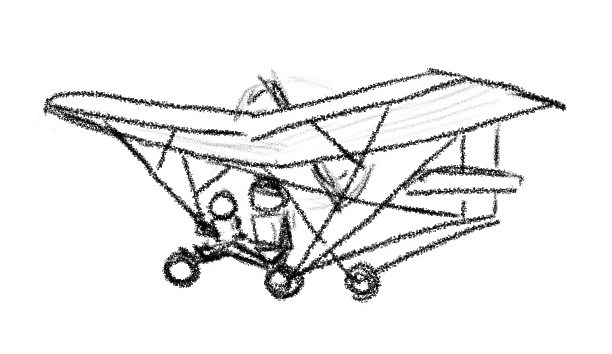
I think my dad was not particulary conscientious
either, at least not in terms of planning ahead,
paying attention to details, following
conventions. He was always in motion, happiest
whenever he had a crazy project. Fortunately, he
was really good at inspiring other people to
handle the logistics. He came up with the ideas
("I want to fly across the Philippines in an
ultralight") and people like my mom figured out
how (fuel, landing spots, etc.). His spontaneous
road trips drove me a little batty when I was a
kid. But also, when it came to the things he cared
about, he could spend hours, days, weeks on
getting it right. I remember how he'd stay up
late to figure something out, whether it was
digital photography or Microsoft 3D Pinball. I've
written about how he repeatedly drew variations on
the same sketch in order to figure out what he
wanted. He did okay. He found his way, even though
it looked nothing at all like the standard paths.
I'm probably doing all right, too.
</p>

<p>
My mom was more conscientious and deliberate than
my dad was. She handled the business while my dad
got to focus on his passions. From her, I picked
up the habits of reading and writing. I think I'd
like to be more of a mix between their styles
rather than one or the other.
</p>
</div>
</div>
<div id="outline-container-org748236a" class="outline-2">
<h3 id="org748236a">Growing</h3>
<div class="outline-text-2" id="text-org748236a">
<p>
Apparently, <a href="https://pmc.ncbi.nlm.nih.gov/articles/PMC2562318/">conscientiousness tends to increase
with age</a>, so that's interesting. I feel slower
when it comes to some things (probably because of
adapting to all those distractions and periods of
sleep deprivation, or maybe age, or simply a more
realistic evaluation of my abilities), so it's
easier to give myself time to do things that are
slow. Maybe I'll get better at enjoying the act of
practising and paying attention to the details.
I'll probably benefit from more orderliness, too.
I wonder how I can get my brain to enjoy
decluttering and figuring out the right homes for
objects. It's a little like preparing the space so
that I can see what I like and it's easy to work
on what I enjoy. (Marie Kondo's <a href="https://shop.konmari.com/collections/books">The Life-Changing
Magic of Tidying Up</a> might be relevant here,
although even she has found keeping a tidy house
with kids to be a challenge&#x2026;)
</p>

<details class="code-details" style="padding: 1em;
                 border-radius: 15px;
                 font-size: 0.9em;
                 box-shadow: 0.05em 0.1em 5px 0.01em  #00000057;">
                  <summary><strong>Tangent: A quote from Marie Kondo</strong></summary>
<blockquote>
<p>
When I first became a mother, I felt frustrated when I couldn’t tidy my home exactly the way I wanted. Then, I had two more children, and I found I didn’t even have the energy to consider some of my former practices around the house!
</p>

<p>
With this in mind, here are some tips that help me keep my home in order with two young children.
</p>

<p>
Motherhood has taught me to be more forgiving of myself. The joy that comes from parenting exceeds any satisfaction that could have come from a perfectly neat home. My children also remind me that our lives can shift daily (if not every minute) — and that the best we can do is honor where we are in the present moment.
</p>
</blockquote>
<p>
<a href="https://konmari.com/marie-kondos-tips-for-tidying-with-children/">source</a>
</p>


</details>

<p>
I've been trying to think of a neutral or
positively-coded word for the opposite of the
conscientiousness personality trait. I asked
Claude AI to generate a bunch of antonyms. I don't
quite identify with "free-spirited" or
"spontaneous", but I like "adaptable" and
"improvisational," and "interest-driven" is an
accurate description of the way we spend our
energy. Those words don't quite cover the same
cluster of meanings that "conscientious" does, but
they give me other ways to think about the
personality trait as something more positive.
</p>
</div>
</div>
<div id="outline-container-orge40eb1f" class="outline-2">
<h3 id="orge40eb1f">Learning on my own and with others</h3>
<div class="outline-text-2" id="text-orge40eb1f">
<p>
I'm always curious about how I can work with what
I've got. New challenges, new experiences, new
capabilities&#x2026; I get to learn even more about how
my brain works and what I can do, especially as I
build systems and processes to support myself.
</p>

<p>
Figuring out more about building on my strengths
will also help me parent A+, so this work is extra
worth it. I can even learn from the worries that
sometimes flutter up when I see her also wandering
far from what the school system would probably
prefer that she focus on.
</p>

<div class="center-doodle" id="org4bd2d14">

<figure id="orgb02b46a">
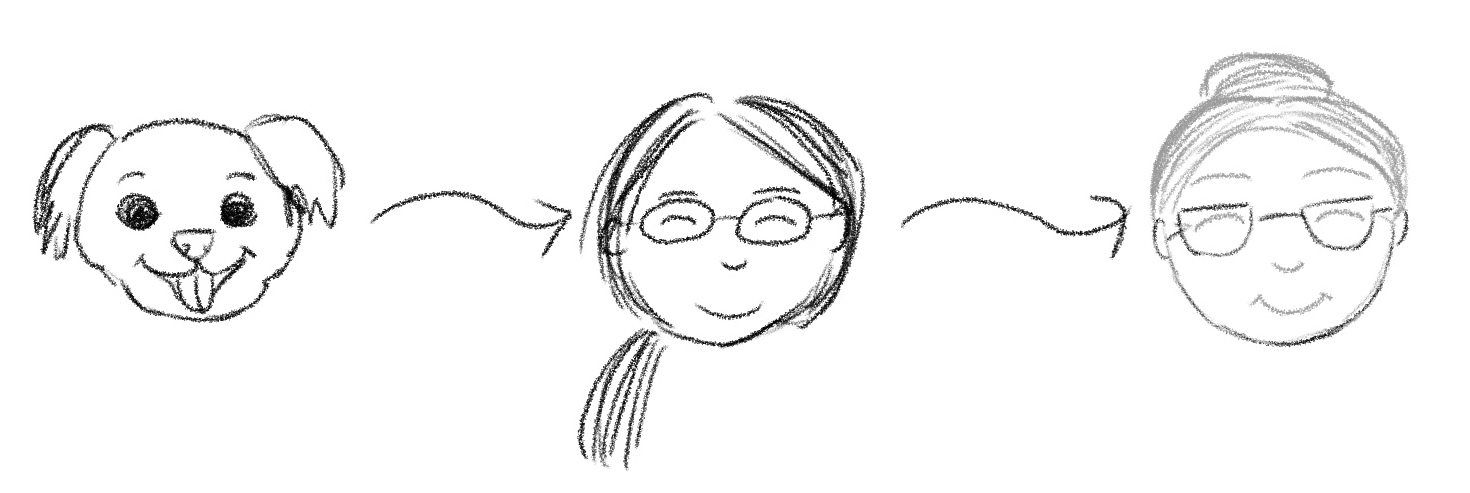
<img src="https://sachachua.com/blog/2025/03/reflecting-on-my-conscientiousness-or-whatever-the-opposite-is/conscientiousness-timeline.jpg" alt="conscientiousness-timeline.jpg" title="Timeline" style="max-height:120px">

</figure>

</div>

<p>
Thinking about processes and tools and
self-acceptance also makes me think a little about
Andy's recent blog post <a href="https://plaindrops.de/blog/2025/tenyearsofemacs/">My 10 Years with Emacs</a>, in
which (among other thoughts about what he's
learned about using Emacs and other people he
wants to thank for helping) he mentions thinking
of me as kind of the community mom. I was 18 when
I started using Emacs, I've grown up in this
community, and I've got blog posts and videos that
help me catch glimpses of myself throughout the
years. It does feel interesting to notice the
shifts in my brain, from kind of an enthusiastic
puppy bursting with energy to something more about
experimentation, reflection, and connection. If I
can get better at understanding myself and the
tools I can build to support who I am and what I
want to do, I wonder if that'll help other people
too. I'm looking forward to being able to someday
bring grandparent energy to this. What could that
be like? There are people even older than I am in
this community, which is wonderful. I'm looking
forward to seeing how we all figure out how to
work with what we've got.
</p>
</div>
</div>
<div><a href="https://sachachua.com/blog/2025/03/reflecting-on-my-conscientiousness-or-whatever-the-opposite-is/index.org">View org source for this post</a></div>
<p>You can <a href="mailto:sacha@sachachua.com?subject=Comment%20on%20https%3A%2F%2Fsachachua.com%2Fblog%2F2025%2F03%2Freflecting-on-my-conscientiousness-or-whatever-the-opposite-is%2F&body=Name%20you%20want%20to%20be%20credited%20by%20(if%20any)%3A%20%0AMessage%3A%20%0ACan%20I%20share%20your%20comment%20so%20other%20people%20can%20learn%20from%20it%3F%20Yes%2FNo%0A">e-mail me at sacha@sachachua.com</a>.</p>]]></content>
		</entry><entry>
		<title type="html">Questions I often ask myself</title>
		<link rel="alternate" type="text/html" href="https://sachachua.com/blog/2018/08/questions-i-often-ask-myself/"/>
		<author><name><![CDATA[Sacha Chua]]></name></author>
		<updated>2019-05-30T00:35:45Z</updated>
    <published>2018-08-20T04:50:00Z</published>
    <category term="reflection" />
		<id>https://sachachua.com/blog/?p=29302</id>
		<content type="html"><![CDATA[<p>Chenny asked me what kinds of things I&apos;m concerned about, so I started reflecting on the kinds of questions I usually ask myself. Here&apos;s a rough list with some examples:</p>
<ul class="org-ul">
<li>What could make things a little bit better? How can I compound those improvements? <a href="https://sachachua.com/blog/category/kaizen/">A few notes on kaizen</a></li>
<li>Which trade-offs might be worth it? Which ones do I decide against? How can I experiment?</li>
<li>What do I want from this stage? What has changed? How can I make the most of that? What&apos;s coming up next? <div class="sketch-thumbnail"><a class="photoswipe" href="https://sketches.sachachua.com/filename/2018-07-29b%20What%20do%20I%20want%20from%20this%20stage%20%23parenting%20%23planning.png" data-src="https://sketches.sachachua.com/static/2018-07-29b%20What%20do%20I%20want%20from%20this%20stage%20%23parenting%20%23planning.png" data-title="2018-07-29b What do I want from this stage #parenting #planning" data-w="1500" data-h="900"><picture>
      <img src="https://sketches.sachachua.com/thumbnails/2018-07-29b%20What%20do%20I%20want%20from%20this%20stage%20%23parenting%20%23planning.png" width="" height="" alt="2018-07-29b What do I want from this stage #parenting #planning" loading="lazy" decoding="async">
      <figcaption>2018-07-29b What do I want from this stage #parenting #planning</figcaption>
    </picture></a></div>, <div class="sketch-thumbnail"><a class="photoswipe" href="https://sketches.sachachua.com/filename/2017-05-07a%20What%20do%20I%20want%20to%20learn%20at%20this%20stage%20%23parenting%20%23learning%20%23plans.png" data-src="https://sketches.sachachua.com/static/2017-05-07a%20What%20do%20I%20want%20to%20learn%20at%20this%20stage%20%23parenting%20%23learning%20%23plans.png" data-title="2017-05-07a What do I want to learn at this stage #parenting #learning #plans" data-w="1500" data-h="900"><picture>
      <img src="https://sketches.sachachua.com/thumbnails/2017-05-07a%20What%20do%20I%20want%20to%20learn%20at%20this%20stage%20%23parenting%20%23learning%20%23plans.png" width="" height="" alt="2017-05-07a What do I want to learn at this stage #parenting #learning #plans" loading="lazy" decoding="async">
      <figcaption>2017-05-07a What do I want to learn at this stage #parenting #learning #plans</figcaption>
    </picture></a></div></li>
<li>What could awesome look like? How can I tell if I&apos;m on the right track? How far do I want to go? <a href="https://sachachua.com/blog/2014/03/good-enough-good-awesome-thinking-want-get/">Example</a>, <a href="https://sachachua.com/blog/tag/wild-success/">other posts</a></li>
<li>What might failure look like? What are the warning signs? <a href="https://sachachua.com/blog/2012/12/experiment-pre-mortem-imagining-and-dealing-with-causes-of-failure/">Example: Experiment pre-mortem</a>, <a href="https://sachachua.com/blog/2014/04/experiment-update-mid-term-pre-mortem-check/">Update</a></li>
<li>What are the risks and downsides? How can I mitigate them?</li>
<li>How can I make things easier for future me?</li>
<li>How can I test and work around my current limits? <a href="https://sachachua.com/blog/2015/04/squirrel-brain/">Ex: squirrel brain</a></li>
<li>What do I want to remember, reflect on, and share?</li>
<li>What do my decisions tell me about my values? Do I agree? Do I want to change things?</li>
<li>What are the results of past decisions and experiments? What can I learn from those? <a href="https://sachachua.com/blog/category/decision/">A few notes on decisions</a></li>
<li>How do I want to grow?</li>
<li>What do I want to learn? How can I learn it? What do I know now?</li>
<li>How can I get better at seeing, noticing, asking, reflecting, organizing, sharing, improving?</li>
<li>Where can I take advantage of leverage or comparative advantage? Where is it good to not optimize along obvious dimensions?</li>
<li>What would I do if I were starting from scratch? Which sunk costs should I ignore?</li>
<li>What can I break down, connect, or transform?</li>
<li>How am I different from alternate universe mes? How can I make the most of that? <a href="https://sachachua.com/blog/2014/04/planning-ahead-stories/">Example</a></li>
<li>What happens if I look closely at my discomfort or fear? Where am I shying away from something, and why? <a href="https://sachachua.com/blog/2014/11/dealing-uncertainty-one-step-time/">Example: uncertainty</a>, <a href="https://sachachua.com/blog/2015/01/learning-work-things/">working on my own things</a>, <a href="https://sachachua.com/blog/2015/02/5-year-experiment-conversation-anxious-side-sharing-time-might-better-giving-money/">the experiment</a></li>
<li>Where does it make sense to take on more difficulty or do things worse so that I can do things even better later on?</li>
<li>What have I forgotten or neglected? What do I want to reclaim, and what do I want to let go? <a href="https://sachachua.com/blog/2012/07/its-okay-if-you-dont-do-everything/">Some thoughts</a></li>
<li>What do I not know to look for? How can I bump into stuff like that?</li>
</ul>
<p>At the moment, I&apos;m focused on time and attention. I think about what&apos;s worth giving up sleep for, and how sleeping more might help with some things like thinking. I think about time with W- and A-. I think about week-to-week changes and how I can adapt. I think about how we can use little bits of time to improve things in order to more effectively use time. There&apos;s definitely a lot to figure out!</p>
<p>You can <a href="mailto:sacha@sachachua.com?subject=Comment%20on%20https%3A%2F%2Fsachachua.com%2Fblog%2F2018%2F08%2Fquestions-i-often-ask-myself%2F&body=Name%20you%20want%20to%20be%20credited%20by%20(if%20any)%3A%20%0AMessage%3A%20%0ACan%20I%20share%20your%20comment%20so%20other%20people%20can%20learn%20from%20it%3F%20Yes%2FNo%0A">e-mail me at sacha@sachachua.com</a>.</p>]]></content>
		</entry><entry>
		<title type="html">Book reflection: Raising a Secure Child</title>
		<link rel="alternate" type="text/html" href="https://sachachua.com/blog/2018/07/book-reflection-raising-a-secure-child/"/>
		<author><name><![CDATA[Sacha Chua]]></name></author>
		<updated>2018-07-22T05:38:44Z</updated>
    <published>2018-07-22T01:38:44Z</published>
    <category term="reflection" />
		<id>https://sachachua.com/blog/?p=29277</id>
		<content type="html"><![CDATA[<p><i>Raising a Secure Child </i>(Guilford Publications, 2017) is about reflecting on and working with the Circle of Security: how kids go out to explore and come back for comfort, and how we can support them both going and coming back. It reminds us to be bigger, stronger, wiser, and kind, and that children can't figure out how to manage their emotions by themselves &#8211; they need us to help them.</p>
<p>Me, I'm working on helping A- feel that I delight in who she is, not just what she does. It's easy to have fun paying attention to every little thing she learns, keeping track of them in my journal, but she's more than the sum of those moments.</p>
<p>I also noticed that some of my internal pressure to get A- outside might come more from my need to be a good parent than what she needs at the moment. Being aware of that helped me slow down and appreciate what she wanted from time at home.</p>
<p>The book talks a lot about shark music, the fears and insecurities that get in our way as parents. I notice that I exert a little effort when supporting A-&#8216;s exploration so that I don't let my worries interfere with her, and I want to be careful not to make her feel I'm crowding her.</p>
<p>I'm definitely safety-sensitive in terms of relationships, and I can see why that's the case. Knowing that, I can try to correct for my biases and work on connecting better. I might not be as comfortable with anger as I could be, and that's worth working on too. I'm okay handling A-&#8216;s anger, although she rarely gets angry too.</p>
<p>I like the way the Being-With concept gives me more ways of thinking about supporting A- through challenging emotions. The sample dialogues were interesting.</p>
<p>I think I need to try the ideas from <i>Raising a Secure Child</i> for a while before I can get a sense of whom I might recommend the book to. It's good food for thought, though.</p>
<p>You can <a href="mailto:sacha@sachachua.com?subject=Comment%20on%20https%3A%2F%2Fsachachua.com%2Fblog%2F2018%2F07%2Fbook-reflection-raising-a-secure-child%2F&body=Name%20you%20want%20to%20be%20credited%20by%20(if%20any)%3A%20%0AMessage%3A%20%0ACan%20I%20share%20your%20comment%20so%20other%20people%20can%20learn%20from%20it%3F%20Yes%2FNo%0A">e-mail me at sacha@sachachua.com</a>.</p>]]></content>
		</entry><entry>
		<title type="html">Thinking about more reflection and sharing</title>
		<link rel="alternate" type="text/html" href="https://sachachua.com/blog/2018/06/thinking-about-more-reflection-and-sharing/"/>
		<author><name><![CDATA[Sacha Chua]]></name></author>
		<updated>2018-06-16T02:46:37Z</updated>
    <published>2018-06-15T18:55:27Z</published>
    <category term="kaizen" />
<category term="parenting" />
<category term="reflection" />
		<id>https://sachachua.com/blog/?p=29239</id>
		<content type="html"><![CDATA[<p>Okay. I've gotten basic recording sorted out, I think. I can capture quick notes, photos, and videos to document our lives and serve as placeholders for further reflection. I can organize them into rough categories. Babysitting gives me enough brainspace for both consulting and self-improvement. My sleep is still a bit messy, but that's probably at least half because of me. I'm confident about spending time with A- and helping her learn stuff. Time to think of the next steps.</p>
<p>I think there are three big areas for me:</p>
<ul>
<li>planning and experimenting with potential improvements: needs attention, creativity, and implementation time</li>
<li>sharing tweaks and things I've figured out: good for backing up and for conversation</li>
<li>making sense of facts, asking questions, synthesizing, reflecting</li>
</ul>
<p>Our continuous improvement capabilities are okay, although of course there's room to grow. Physical stuff (reorganization, trying stuff, decluttering) can happen throughout the day. Reading fits in late at night or in snippets throughout the day, although I'm still skimming for things to think about instead of being able to take notes or think about things in depth. Coding tiny little tools fits in late at night or during babysitting sessions &#8211; not big projects yet, but shell scripts and short Emacs Lisp functions are quite doable.</p>
<p>I'd like to get better at circling back and posting source code and experiment notes. Maybe I'll start by including just a paragraph or two describing key motivation and intended result, then jump straight into the code or description. I'm not sure if it will help anyone else, but who knows? Besides, it's good to have stuff like that in my own archive.</p>
<p>It seems like such a splurge to use babysitting time for thinking, drawing, and writing. I don't know if I can write a post worth $120+ to myself or other people, and besides, I want to write more personally relevant things before I get back into sketchnoting books or putting together, say, Emacs guides. But if I think of the babysitting as primarily paying for A- to practise independence and social interaction with someone one-on-one, I do some consulting every week, and I make an effort to pick up one or two new activity ideas each time we have someone over, I can think of the discretionary time as a bonus instead of trying to optimize my use of that time.</p>
<p>Let me think about sense-making. I've been focusing on just capturing what was going on because it was hard to think more deeply. I'm a little less preoccupied now, so I have some brainspace for thinking. Some questions to ponder:</p>
<ul>
<li>What is A- interested in learning? What does she think? Why does she do what she does? How can I grow so that I can support her even more effectively?</li>
<li>What else can I experiment with? How can I reduce waste or costs (including intangibles), and how can I increase benefits?</li>
<li>How can I make learning visible for both A- and me?</li>
<li>What do I want from all of this? How do I want this to shape me?</li>
</ul>
<p>Writing this on a bench in the park, arms around a sleeping A-, I'm somewhat challenged by the small window I'm writing in (there's room for a couple of paragraphs and that's it), the inability to refer to other things side by side, and the possibility of interruption. But maybe I can think and write in medium-sized chunks: a little bigger than the quick notes I've been taking, but small enough that I don't need an outline or the ability to easily rearrange my text. I can write more stream-of-consciousness stuff instead of worrying about editing. I can give myself permission to cover ground relatedly instead of worrying whether I'd written about something before, or if I'd just dreamed it.</p>
<p>Let's warm up those thinking muscles. :)</p>
<p>You can <a href="mailto:sacha@sachachua.com?subject=Comment%20on%20https%3A%2F%2Fsachachua.com%2Fblog%2F2018%2F06%2Fthinking-about-more-reflection-and-sharing%2F&body=Name%20you%20want%20to%20be%20credited%20by%20(if%20any)%3A%20%0AMessage%3A%20%0ACan%20I%20share%20your%20comment%20so%20other%20people%20can%20learn%20from%20it%3F%20Yes%2FNo%0A">e-mail me at sacha@sachachua.com</a>.</p>]]></content>
		</entry><entry>
		<title type="html">Scribe and tinker</title>
		<link rel="alternate" type="text/html" href="https://sachachua.com/blog/2018/02/scribe-and-tinker/"/>
		<author><name><![CDATA[Sacha Chua]]></name></author>
		<updated>2018-02-22T20:01:01Z</updated>
    <published>2018-02-22T15:01:01Z</published>
    <category term="passion" />
<category term="purpose" />
<category term="reflection" />
		<id>https://sachachua.com/blog/?p=29167</id>
		<content type="html"><![CDATA[<p>I've been figuring out more about what tickles my brain and what I want to do with my life.</p>
<p>On one hand, I'm a scribe. I like extracting, organizing, and connecting ideas. I like getting stuff out of my head and into a form that I can work with or share with other people. I often like helping get stuff out of other people's heads too. This explains my fascination with blogging, sketchnoting, personal knowledge management, and processes. To get better at this, I can focus on skills like:</p>
<ul>
<li>Asking questions</li>
<li>Finding resources</li>
<li>Making sense</li>
<li>Connecting and building on ideas</li>
<li>Organizing</li>
<li>Communicating</li>
<li>Archiving</li>
</ul>
<p>On the other hand, I'm a tinker. I like tweaking things to make them better. It's not about big inventions, but small, continuous improvements. This explains my fascination with Emacs, Quantified Self, open source, and general geeking around. To get better at this, I can focus on skills like:</p>
<ul>
<li>Seeing problems and possibilities</li>
<li>Estimating, prioritizing, and evaluating</li>
<li>Setting up experiments</li>
<li>Connecting ideas</li>
<li>Learning techniques</li>
<li>Coding</li>
<li>Tweaking physical things</li>
</ul>
<p>If I look at the intersection of being a scribe and being a tinker, that explains my interest in:</p>
<ul>
<li>Building/tweaking systems to help me capture, organize, connect, and share knowledge</li>
<li>Writing about experiments and lessons learned</li>
</ul>
<p>What would it look like to be very, very good at these things? It's quite convenient that I'm into knowledge work, since I can learn from millennia of people passionate about that. Tinkering shows up in entrepreneurship and invention, so I have plenty of role models there, too. I could probably spend a lifetime learning as much as I can from Benjamin Franklin and similar people.</p>
<p>How does parenting influence this? What can I gain from being the primary caregiver of a young child?</p>
<p>I've taken advantage of my push towards externalizing memory to work out a daily/weekly/monthly/yearly journaling workflow that works for me, and a way to think about questions in the scattered moments I have for myself. It took a bit of figuring out and there are things I still want to improve about my process. Chances are that there are other similarly-inclined people who could benefit. I wonder what things could be like if we could get better at thinking, capturing, and sharing at this stage. I don't expect that I'll come up with some brilliant insights. Most of my notes are about everyday life or my own questions. Still, I notice that this process seems to be good for my mental health, and it's okay for me to explore ideas slowly especially if I get better at building on ideas instead of going around in circles. I can let the tough meaning-making be handled by people like Pulitzer-prize journalists (surely there must be quite a few who have also been or will become primary caregivers) and people who have different life arrangements (like part-time daycare), and I can focus on the questions I'm particularly curious about or the things that are uncommon about our experiments.</p>
<p>As for tinkering, there are tons of improvement opportunities exposed by the demands of parenting. If I keep track of the pain points/opportunities and work on improving my skills, I'll probably grow at just the right pace. It would be interesting to improve my quick-experiment rate. Reading and thinking give me lots of things to try in terms of parenting, and talking to other people might help a lot too. W- is a good mentor for quick DIY and household things. It's a little harder to do quick programming tweaks at the moment, but that can wait until I can concentrate more. I've set up my phone so that I can do some things through it, so I can consider the tradeoff between coding on my phone versus using the time to write.</p>
<p>I think I can make this work so that the time and energy I'll devote to A- over the next couple of years can count for other goals, too. The more clearly I understand myself, the more effectively I can use my time and attention. I'm looking forward to seeing where writing more can take me, since I can do that while A-&#8216;s nursing. During the day, it could be good to explore improvements to our physical environment and our processes, since A- can appreciate those too. There'll be time for other things later, as A- becomes more capable and more independent. Onward!</p>
<p>You can <a href="mailto:sacha@sachachua.com?subject=Comment%20on%20https%3A%2F%2Fsachachua.com%2Fblog%2F2018%2F02%2Fscribe-and-tinker%2F&body=Name%20you%20want%20to%20be%20credited%20by%20(if%20any)%3A%20%0AMessage%3A%20%0ACan%20I%20share%20your%20comment%20so%20other%20people%20can%20learn%20from%20it%3F%20Yes%2FNo%0A">e-mail me at sacha@sachachua.com</a>.</p>]]></content>
		</entry><entry>
		<title type="html">Thinking about impact</title>
		<link rel="alternate" type="text/html" href="https://sachachua.com/blog/2018/02/thinking-about-impact/"/>
		<author><name><![CDATA[Sacha Chua]]></name></author>
		<updated>2018-02-20T20:36:42Z</updated>
    <published>2018-02-20T15:36:42Z</published>
    <category term="parenting" />
<category term="purpose" />
<category term="reflection" />
		<id>https://sachachua.com/blog/?p=29165</id>
		<content type="html"><![CDATA[<p>In preparation for possibly making it to a conversation tomorrow about quantified impact, I've been thinking about the impact I want my experiments to have and how I might be able to observe and measure them.</p>
<p>I realized that I'm less interested in looking at my impact on the wider world and more interested in looking at the impact on myself. I'm also interested in the impact on my family. This is partly due to the influence of Stoicism's focus on the things that I can control, partly the freedom of not having external performance reviews, and partly an experimental belief that if I take care of my own life and share what I'm learning with others, wider impact will follow. I don't need to seek it prematurely. I can focus instead on having a solid foundation to build on.</p>
<p>If I evaluated impact based on the outcomes for A-, I would leave that too vulnerable to chance (what if A- died unexpectedly?) or conflict (what if A- wanted a different path?). It feels more right to focus on doing my part well, and to evaluate myself accordingly. If other things work out well, that's a nice bonus, and keeping an eye on how those things are going can help me check if I'm on track or drifting.</p>
<p>With that in mind, what kind of impact do l want for my experiments, big and small?</p>
<p><b>Deeper appreciation of life, meaning:</b> My biggest experiment at the moment is parenting. Based on research, parenting is likely to increase feelings of satisfaction and purpose, and will probably be worth the reduced autonomy and increased vulnerability. It's not so much about pleasure as it is about eudaimonia.</p>
<p><b>Deeper appreciation of W- and other people: </b>Research is pessimistic on the effect of parenting on marital satisfaction and social connection, but I might be able to counter those effects by paying attention thoughtfully. I've certainly developed a deeper appreciation of W- over the past few years, and I feel like I'm getting to know Toronto better too. Parenting lets me see my family and my in-laws in a new light. I like being able to remember that everyone was a baby once, too, and I like being able to appreciate other people more.</p>
<p><b>Practice in equanimity: </b>Parenting brings plenty of opportunities to apply philosophy to life. I like wasting less energy on frustration and directing more energy towards paying attention and moving forward. I've been able to keep my cool in varied situations, and now I'm working on being able to respond thoughtfully and creatively in the moment.</p>
<p><b>Push to learn and grow:</b> I'm taking advantage of my desire to help A- by learning more about child development, early childhood education, health, science, and other things. I'm sure I'll learn about lots of random topics along the way. I'm trading a bit of self-direction for motivation and pushes out of my comfort zone. I could start tracking this by writing down what I'm learning about.</p>
<p><b>Experiences, empathy: </b>Not only with W- and A-, but with other people too.</p>
<p><b>Immersion into children's worlds, playfulness, wonder, creativity:</b> Good stuff.</p>
<p><b>Reduced friction, increased capabilities, increased effects:</b> It's good to deal with constraints like sleep disruption and limited attention, since I can find the rough spots and figure out ways to improve them.</p>
<p><b>Good boundaries, assertiveness, deliberation: </b>I'm learning more about making decisions, asserting myself, and changing my mind as needed.</p>
<p><b>Shared notes, possible business ideas, credibility:</b> Other people might benefit from what I'm learning or doing.</p>
<p><b>Increased Emacs community, learning from each other: </b>I'm glad I can do Emacs News. Looking forward to having more brain space so that I can contribute tweaks too, since playing with Emacs improves my capabilities and tickles my brain.</p>
<p>The book <i>All Joy and No Fun</i> promises to be an interesting summary of the research into the effects of parenting on parents.</p>
<p>If I can be more thoughtful about the effects I want (or need to watch out for) from the various choices I can make, then I  might be able to make better decisions or invest a little effort and get even better results. It's fun thinking about these things!</p>
<p>You can <a href="mailto:sacha@sachachua.com?subject=Comment%20on%20https%3A%2F%2Fsachachua.com%2Fblog%2F2018%2F02%2Fthinking-about-impact%2F&body=Name%20you%20want%20to%20be%20credited%20by%20(if%20any)%3A%20%0AMessage%3A%20%0ACan%20I%20share%20your%20comment%20so%20other%20people%20can%20learn%20from%20it%3F%20Yes%2FNo%0A">e-mail me at sacha@sachachua.com</a>.</p>]]></content>
		</entry>
</feed>