<?xml version="1.0" encoding="UTF-8"?><?xml-stylesheet href="/assets/atom.xsl" type="text/xsl"?><feed
	xmlns="http://www.w3.org/2005/Atom"
	xmlns:thr="http://purl.org/syndication/thread/1.0"
	xml:lang="en-US"
	><title>Sacha Chua - category - learning</title>
	<subtitle>Emacs, sketches, and life</subtitle>
	<link rel="self" type="application/atom+xml" href="https://sachachua.com/blog/category/learning/feed/atom/index.xml" />
  <link rel="alternate" type="text/html" href="https://sachachua.com/blog/category/learning" />
  <id>https://sachachua.com/blog/category/learning/feed/atom/index.xml</id>
  <generator uri="https://11ty.dev">11ty</generator>
	<updated>2025-02-06T00:45:08Z</updated>
<entry>
		<title type="html">Looking at landscapes; art and iteration</title>
		<link rel="alternate" type="text/html" href="https://sachachua.com/blog/2025/02/looking-at-landscapes-art-and-iteration/"/>
		<author><name><![CDATA[Sacha Chua]]></name></author>
		<updated>2025-02-06T00:45:08Z</updated>
    <published>2025-02-06T00:45:08Z</published>
    <category term="art" />
<category term="supernote" />
<category term="learning" />
<category term="education" />
		<id>https://sachachua.com/blog/2025/02/looking-at-landscapes-art-and-iteration/</id>
		<content type="html"><![CDATA[<div class="no-inversion" id="orgc14fcc3">
<p>
I want to get better at helping A+ learn more
about art, and I want to learn more about art
myself. She'll learn whatever she's ready to
learn, but maybe I can help her get past the
initial frustrations by breaking it down into
smaller skills. As for me, there's plenty I can
learn about seeing, getting stuff to look like
what I'm seeing, imagining things, and
communicating them. If I go about learning the
things I want to learn, maybe she'll come along
and pick things up too.
</p>

<p>
A+'s grade 3 virtual teacher assigned a landscape
art project focusing on <a href="https://tvolearn.com/pages/grade-3-the-arts-visual-arts-learning-activity-6">depth</a> (foreground, middle
ground, background) and value (highlight, midtone,
shadow) using images from <a href="https://artsandculture.google.com/project/national-park-service">The Hidden Worlds of the
National Parks</a>. A+ was curious about Glacier
National Park, and following that thread led us to
this <a href="https://artsandculture.google.com/asset/saint-mary-lake-angelo-chiacchio/VgEAvcAHB6JCGQ">photograph of Saint-Mary Lake by Angelo
Chiacchio</a> (2018), so we used it as a reference.
Angelo Chiacchio took this picture during a
300-day solo journey focusing on the
precarity of our relationship with the world
around us. He called this project .
</p>

<p>
Anyway. Back to the assignment. When A+ started
her artwork in Procreate the other day, I noticed
she was getting frustrated with her lines and
curves not going where she wanted them to go. I
suggested approaching it as a painting instead,
blocking in masses of colour (&#x2026; am I even using
these words correctly?) and then gradually
refining them based on what she sees, kind of like
how you can smoosh some clay and then push it
around until it feels right. She liked that
approach better. We talked about fractions as we
figured out how much space the background features
took, and she painted land and sky and land and
sky until things felt right to her. As she added
details, I sometimes mentioned things I saw in the
photo that I was trying to add to my painting, and
she figured out her own interpretations of those.
I liked how we both got the foreground/middle
ground/background distinction using size and
detail, and how the shadows helped the rocks look
like they were part of the landscape.
</p>

<p>
Here's my take on it. Not entirely sure about the
derivative work status of these ones, but I'm
fairly sure they're no threat to Angelo
Chiacchio's professional prospects as a
designer/photographer/filmmaker. The first one is
done using the Atelier drawing mode on my
<a href="https://sachachua.com/blog/category/supernote">Supernote</a> A5X, and the second one using the
regular note app on the Supernote and just
white/black:
</p>

<div class="row">
<p>
</p><div class="sketch-full"><a class="photoswipe" href="https://sketches.sachachua.com/filename/2025-02-04-08%20Saint-Mary%20Lake%20&#45;&#45;%20painting%20landscape.png" data-src="https://sketches.sachachua.com/static/2025-02-04-08%20Saint-Mary%20Lake%20&#45;&#45;%20painting%20landscape.png" data-title="2025-02-04-08 Saint-Mary Lake &#45;&#45; painting landscape.png" data-w="2033" data-h="1537"><picture>
      <img src="https://sketches.sachachua.com/static/2025-02-04-08%20Saint-Mary%20Lake%20&#45;&#45;%20painting%20landscape.png" width="2033" height="1537" alt="2025-02-04-08 Saint-Mary Lake &#45;&#45; painting landscape.png" loading="lazy" style="max-height: 90vw; height: auto; width: auto" decoding="async">
      <figcaption>2025-02-04-08 Saint-Mary Lake &#45;&#45; painting landscape.png</figcaption>
    </picture></a></div>
<p></p>

<p>
</p><div class="sketch-full"><a class="photoswipe" href="https://sketches.sachachua.com/filename/2025-02-05-02%20Saint-Mary%20Lake%20sketch%202%20&#45;&#45;%20drawing.png" data-src="https://sketches.sachachua.com/static/2025-02-05-02%20Saint-Mary%20Lake%20sketch%202%20&#45;&#45;%20drawing.png" data-title="2025-02-05-02 Saint-Mary Lake sketch 2 &#45;&#45; drawing.png" data-w="3412" data-h="2466"><picture>
      <img src="https://sketches.sachachua.com/static/2025-02-05-02%20Saint-Mary%20Lake%20sketch%202%20&#45;&#45;%20drawing.png" width="3412" height="2466" alt="2025-02-05-02 Saint-Mary Lake sketch 2 &#45;&#45; drawing.png" loading="lazy" style="max-height: 90vw; height: auto; width: auto" decoding="async">
      <figcaption>2025-02-05-02 Saint-Mary Lake sketch 2 &#45;&#45; drawing.png</figcaption>
    </picture></a></div>
<p></p>

</div>

<p>
Now that I've had a chance to look at the
reference photo on my external monitor instead of
on my phone screen, I can see a few more details,
like peaks behind the forests on the left side.
Working with just black/white is handy as I don't
need to slow down to change pen colours. Maybe I
can experiment with a midtone background so that I
just need to add white and black.
</p>

<p>
Yesterday, we logged off from virtual school early
to go to the <a href="https://ago.ca/">Art Gallery of Ontario</a>. I knew the
class was going to do some more work on landscape
art, so I figured it might be nice to check out
the gallery and see things at a different scale.
We could look at actual landscape paintings. As we wandered through the galleries, A+
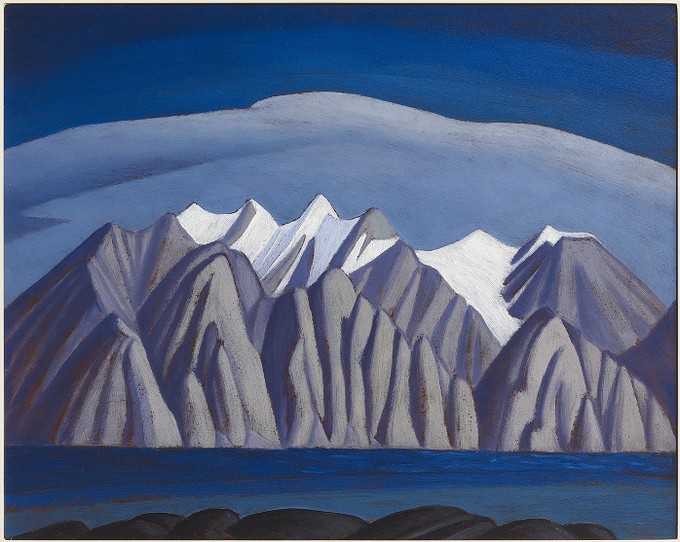
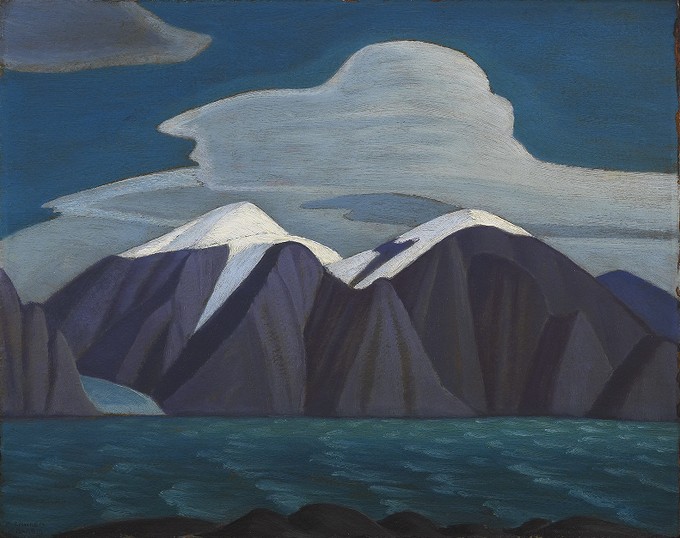
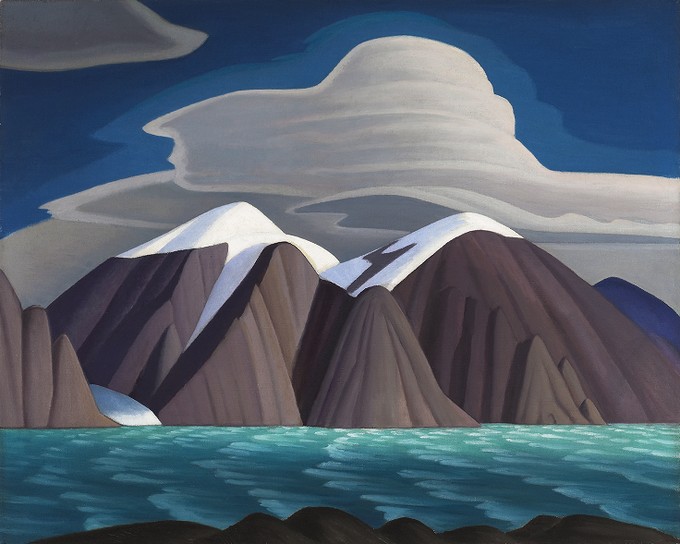
was particularly interested in the <a href="https://ago.ca/collection/browse?related_artists%5B30146%5D=30146">Lawren S.
Harris paintings</a> like <a href="https://ago.ca/collection/object/agoid.103938">South Shore, Bylot Island</a>,
which had two other variations:
</p>

<ul class="org-ul">
<li><a href="https://ago.ca/collection/object/agoid.103971">Bylot Island Shore, Arctic Sketch XXXII</a></li>
<li><a href="https://ago.ca/collection/object/agoid.103972">Bylot Island, South Shore From Eclipse Sound, Arctic Sketches XXXIV</a></li>
</ul>

<p>
We looked at the foam on the waves, the contrast
of the mountains, the clouds, the light, the shape
of the peaks and the level of detail, the
overlapping of the ridges of the mountains, the
proportion of water to land to sky. She pointed to
the elements of the paintings and looked closely
at how it was put together.
</p>

<p>
By Lawren S. Harris, paintings from <a href="https://ago.ca">https://ago.ca</a>, all rights reserved:
</p>

<div class="row">

<figure id="orgae817de">
<a href="https://ago.ca/collection/object/agoid.103972"><img src="https://sachachua.com/blog/2025/02/looking-at-landscapes-art-and-iteration/bylot-island-shore-sketch-32.jpg" alt="bylot-island-shore-sketch-32.jpg"></a>

<figcaption><span class="figure-number">Figure 1: </span>Sketch XXXII</figcaption>
</figure>


<figure id="org3d950db">
<a href="https://ago.ca/collection/object/agoid.103972"><img src="https://sachachua.com/blog/2025/02/looking-at-landscapes-art-and-iteration/bylot-island-shore-sketch-35.jpg" alt="bylot-island-shore-sketch-35.jpg"></a>

<figcaption><span class="figure-number">Figure 2: </span>Sketch XXXIV</figcaption>
</figure>


<figure id="orgfb3180a">
<a href="https://ago.ca/collection/object/agoid.103938"><img src="https://sachachua.com/blog/2025/02/looking-at-landscapes-art-and-iteration/south-shore-bylot-island.jpg" alt="south-shore-bylot-island.jpg"></a>

<figcaption><span class="figure-number">Figure 3: </span>South Shore, Bylot Island</figcaption>
</figure>

</div>

<p>
(I think it's okay to use these thumbnails under the Fair Dealing clause of <a href="https://ago.ca/ago-terms-use">AGO Terms of Use</a>.)
</p>

<p>
Reading more about <a href="https://en.wikipedia.org/wiki/Lawren_Harris">Lawren S. Harris</a>, I learned
that he invited artists to come together, provided
them an inexpensive space to work, and financed
trips for them, and helped form the <a href="https://en.wikipedia.org/wiki/Group_of_Seven_(artists)">Group of Seven</a>
(of which he was one) in 1920. That reminds me a
little of <a href="https://www.math.toronto.edu/mccann/199/thurston.pdf">William Thurston's thoughts</a> on how
mathematical knowledge can move so much more
quickly through informal, in-person discussions
compared to lectures or published papers.
Connection: A group of painters thinking about
Canadian art together. And a small-scale
connection: the bouncing around of ideas in the
Emacs community. But I am trying to squeeze too
many tangents into this post.
</p>

<p>
I liked being able to look at versions of the same
idea and discuss the differences between them.
Today I looked up the paintings so I could write
about them. I told A+ about how the two sketches
were numbered #32 and #35, which means the artist
probably did lots of studies to figure out how to
paint what he wanted to show, and that even
accomplished artists try lots of things in order
to figure things out. It's interesting to get a
glimpse of what happens behind the scenes of a
polished piece of art.
</p>

<p>
I brought the iPad and my Supernote so that A+
could finish her digital landscape painting and so
that I could work on mine. A proper class field
trip came in, too. We watched the grade 6/7
students sprawl on the floor, pick paintings to
study, and sketch with pencil and paper. A+ got
her painting to a point where she really liked it.
I liked the way her digital brushstrokes textured
the rocks in the foreground where mine still felt
flat, and the attention she paid to the snow in
the peaks. Anyway, homework done, we explored some
more. She found the AGO energizing and pulled me
from exhibit to exhibit, although we did have to
reluctantly save some galleries for the next trip.
</p>

<p>
I was a little envious of A+'s familiarity with
Procreate. Maybe when I get the hang of value and
if art becomes more of a thing, I might consider
getting my own iPad for digital painting, since
she often uses W-'s iPad for reading, watching, or
drawing. I'd love to work with colours again. In
the meantime, I still have much I can learn on the
Supernote, even though it can only do white,
black, and two levels of gray. When I browse
through <a href="https://reddit.com/r/supernote">/r/supernote</a> for inspiration (there's a
filter for just <a href="https://www.reddit.com/r/Supernote/?f=flair_name%3A%22Artwork%22">artwork posts</a>), it's&#x2026; ah&#x2026; easy
to see that the hardware is not the limiting
factor. Besides, I can practise using <a href="https://krita.org/en/">Krita</a> on the
X230 tablet PC. And it's been helpful, actually,
limiting myself to just what the Supernote can do.
I don't have to spend time trying to figure out
colours that reflect what I see and that somehow
work together with the other colours in the image.
I can focus on learning how to see in terms of
value first, and maybe dig into more of the
techniques around black and white drawings.
</p>

<p>
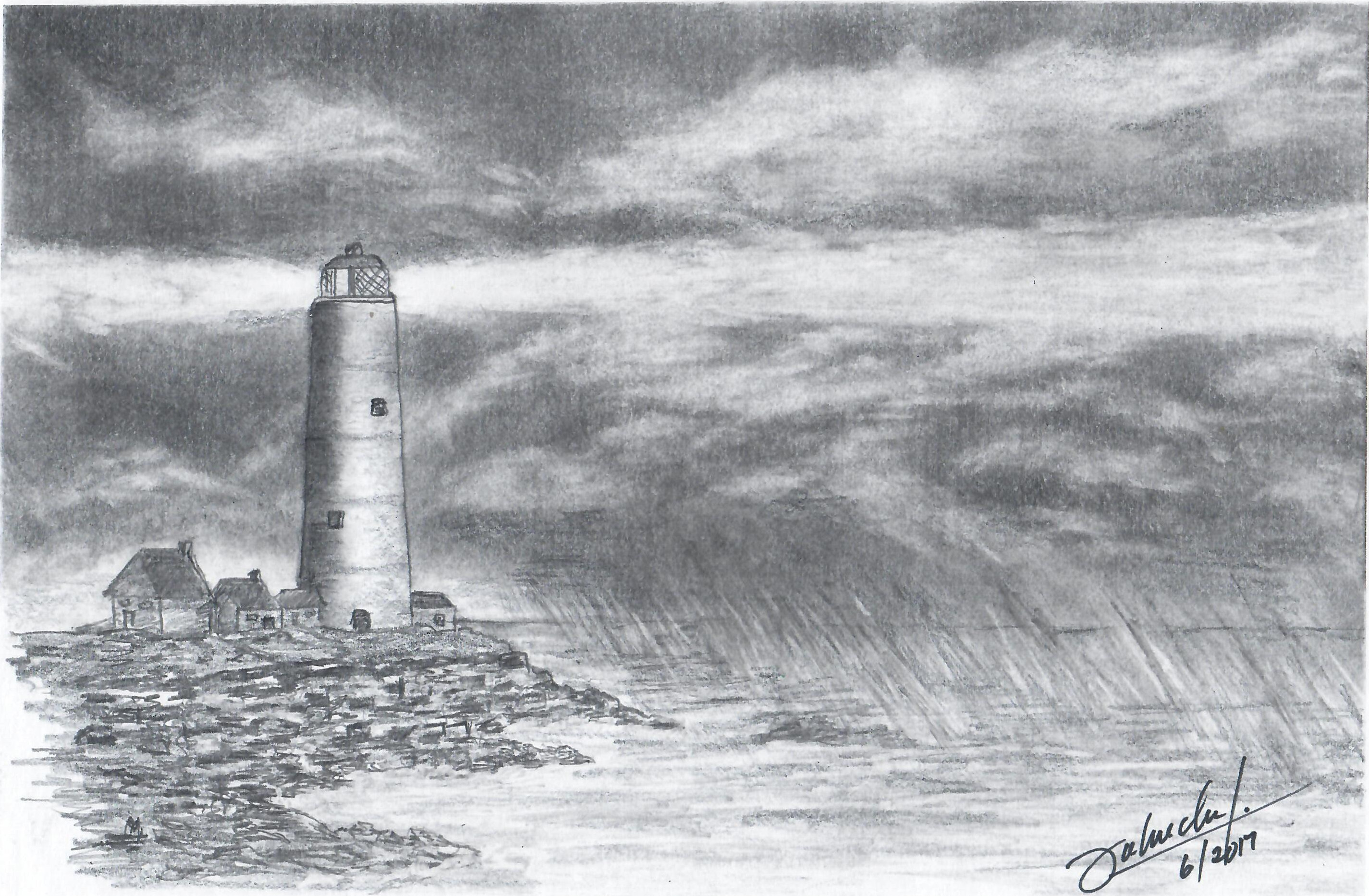
Towards the end of my father's life, he took up
drawing and watercolour painting, teaching himself
through YouTube tutorials and tons of practice. As
an advertising photographer, he had already spent
decades thinking about composition and light, so I
think he had a bit of an unfair advantage,
especially since drawing meant that he didn't even
have to have the right dramatic sky to Photoshop
into an image.
</p>

<p>
When my dad asked me which of his drawings or
paintings I wanted to keep, I asked for his
sketchbook. I wanted the rough sketches, the
in-between steps, the experiments. He gave me his
one sketchbook and a bunch of loose sketches in a
small case. I think he must have drawn in other
sketchbooks, but maybe he didn't keep them, or
maybe he really just leveled up that quickly. So
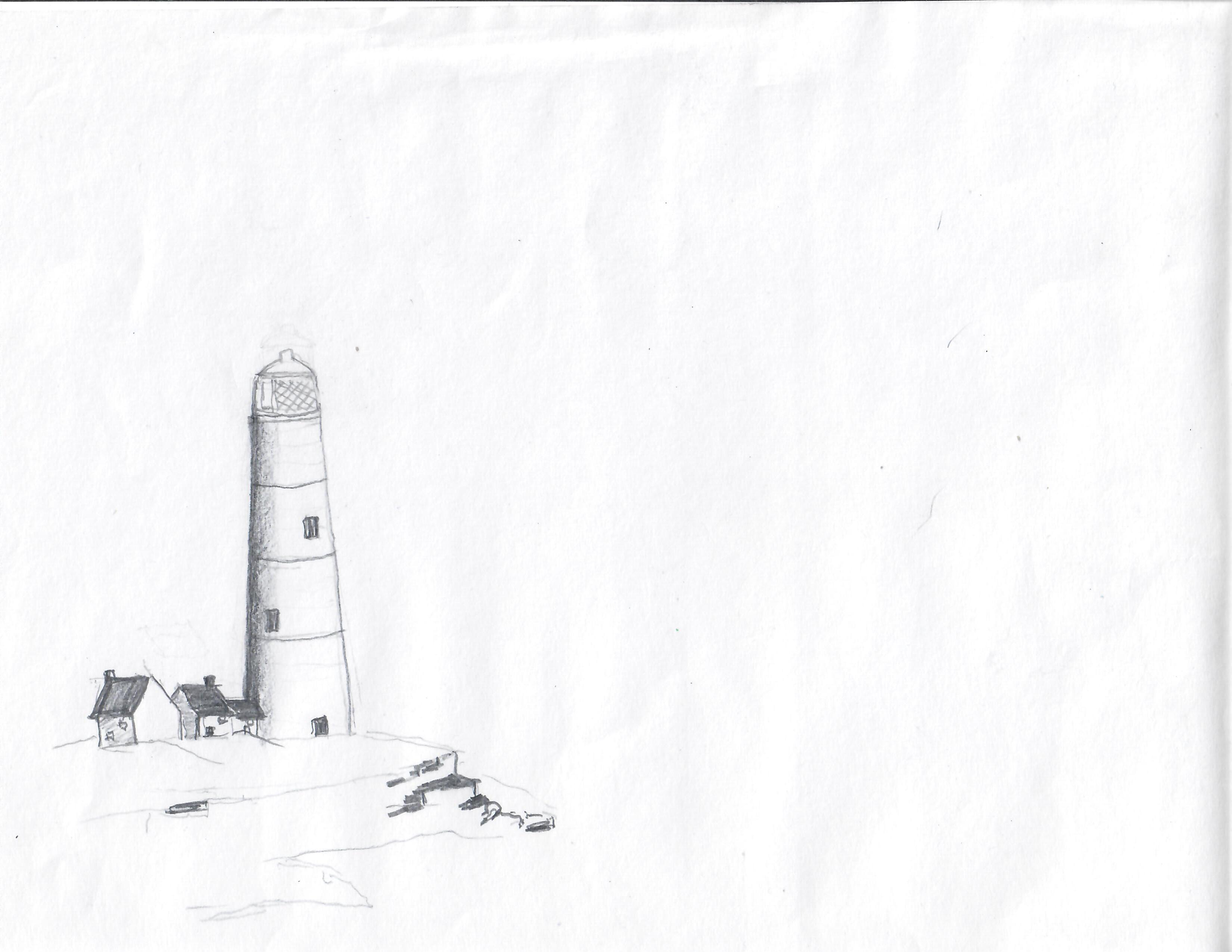
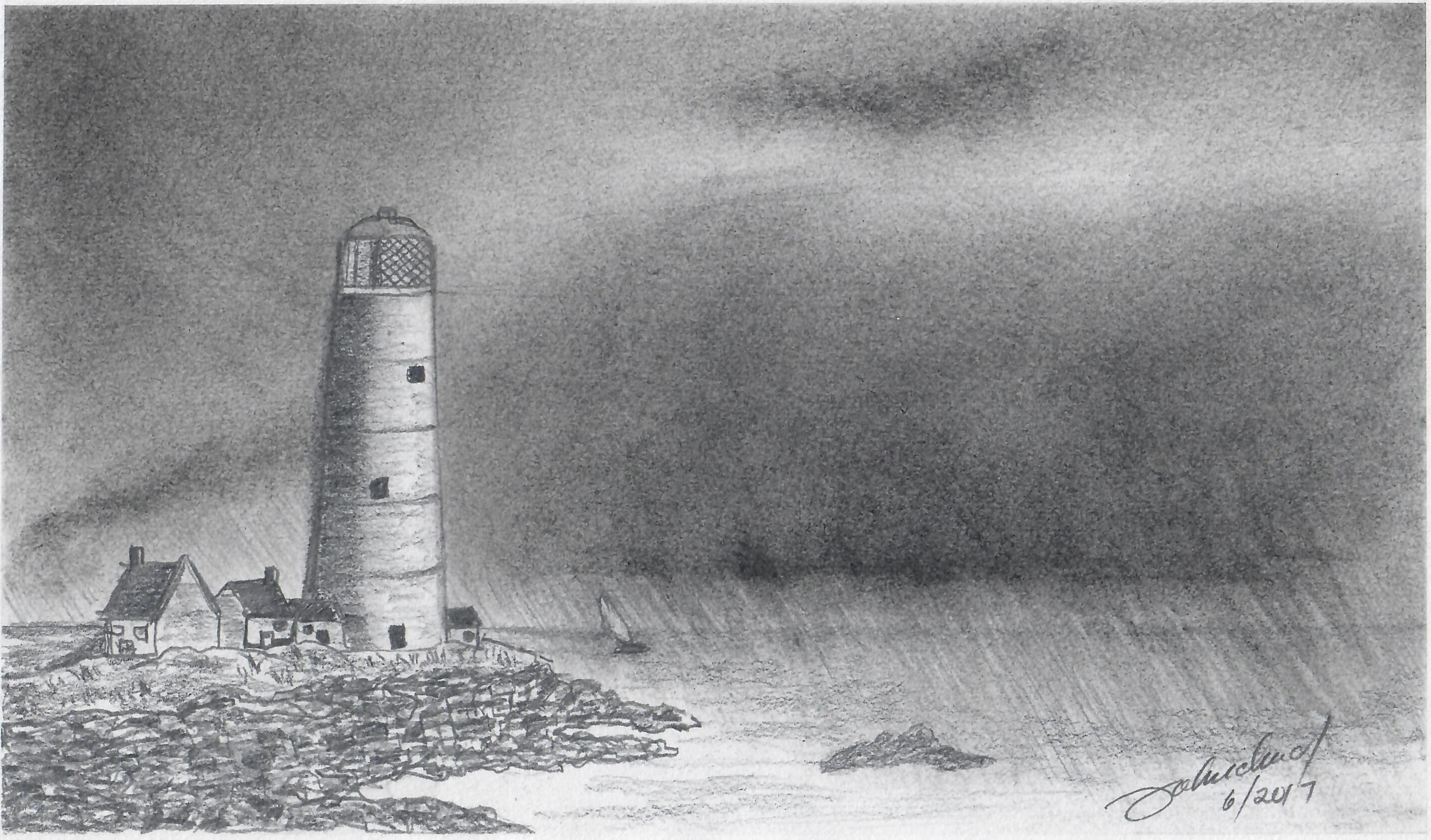
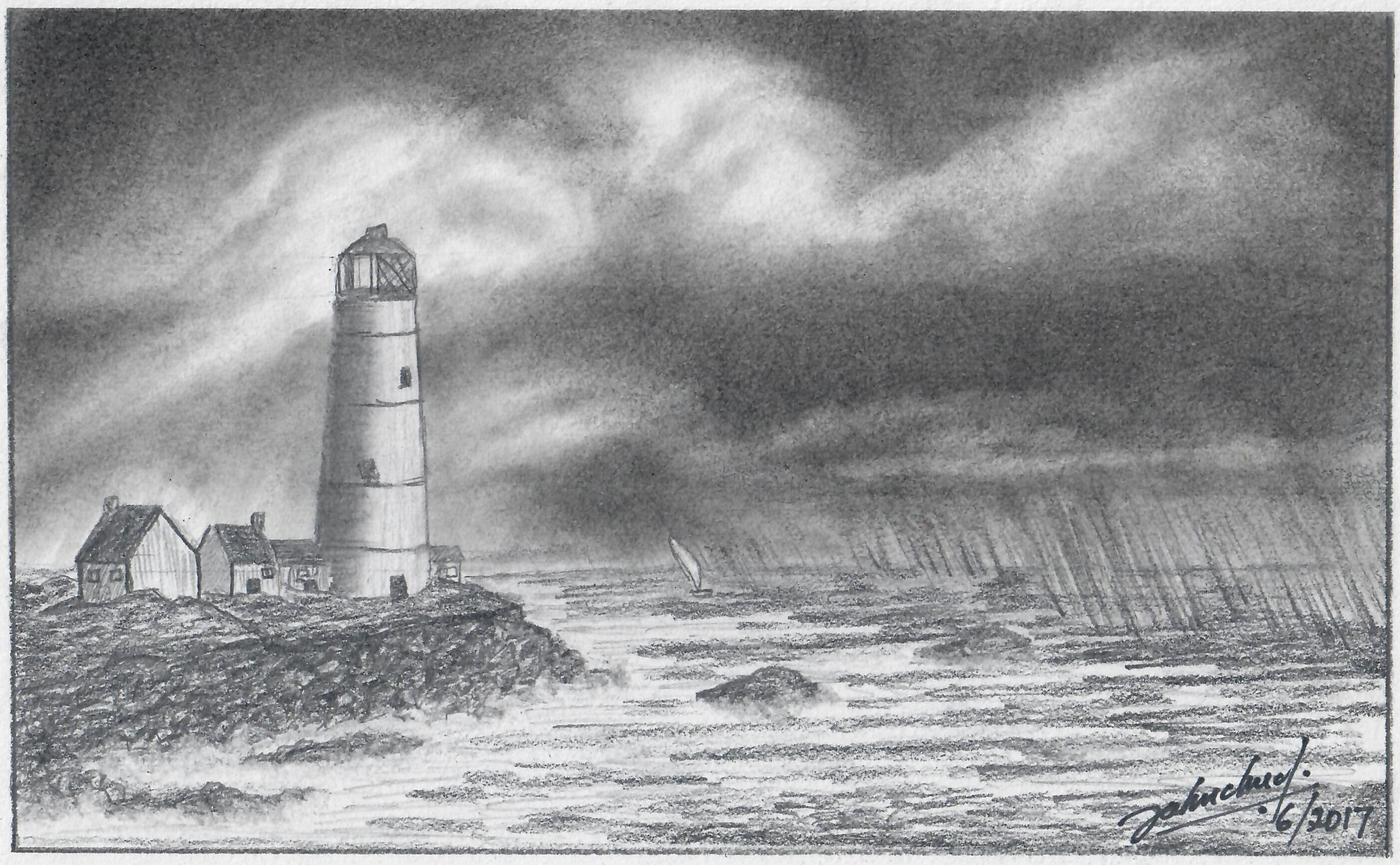
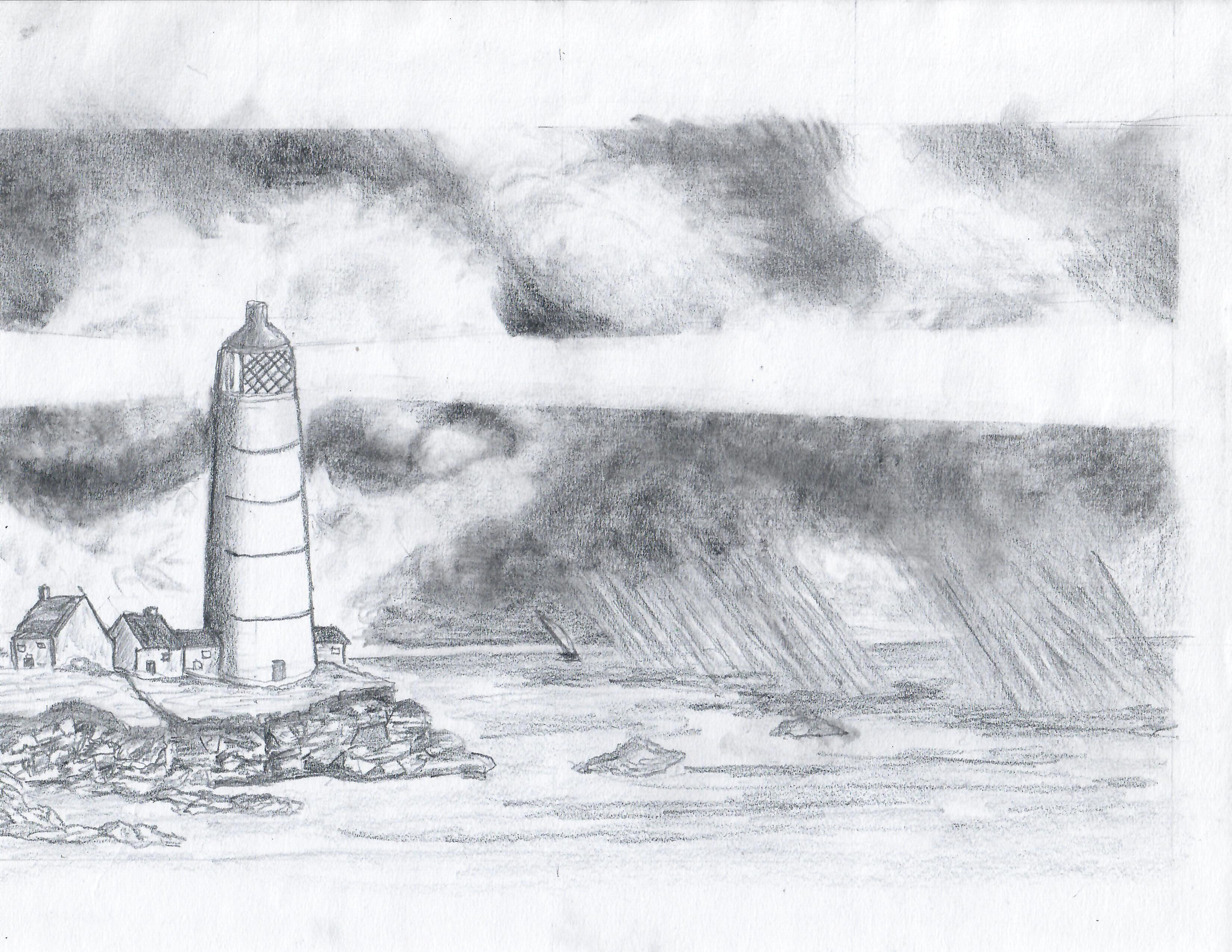
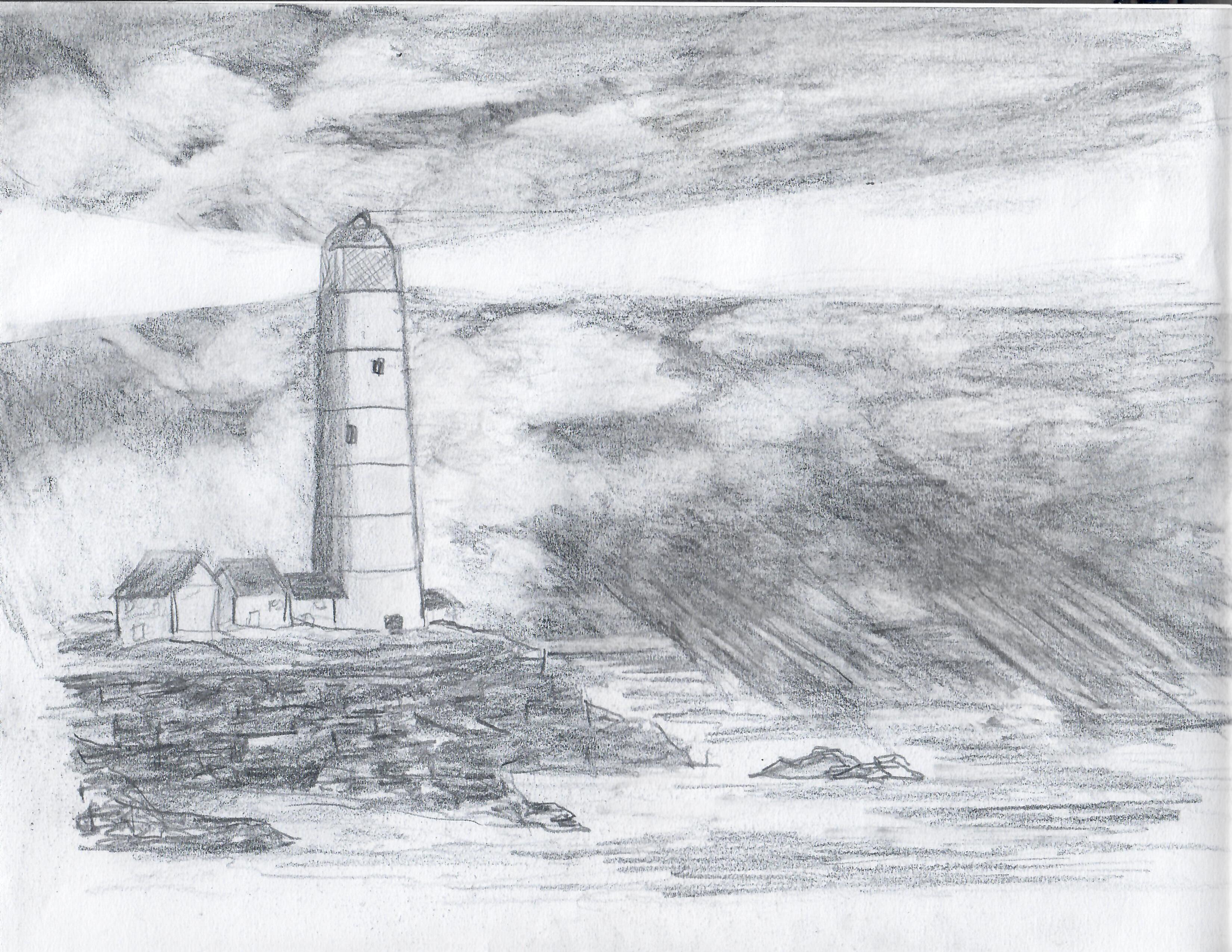
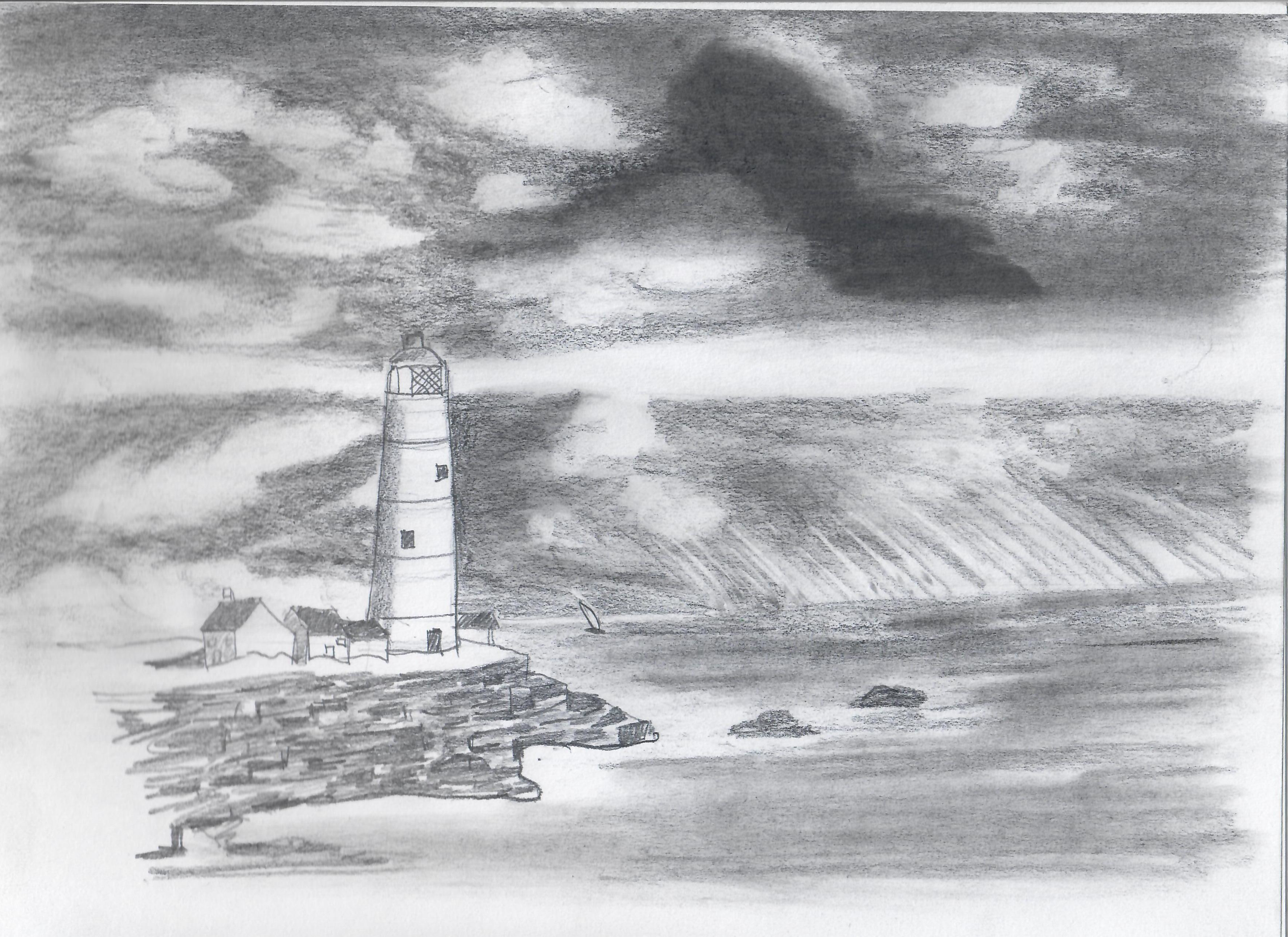
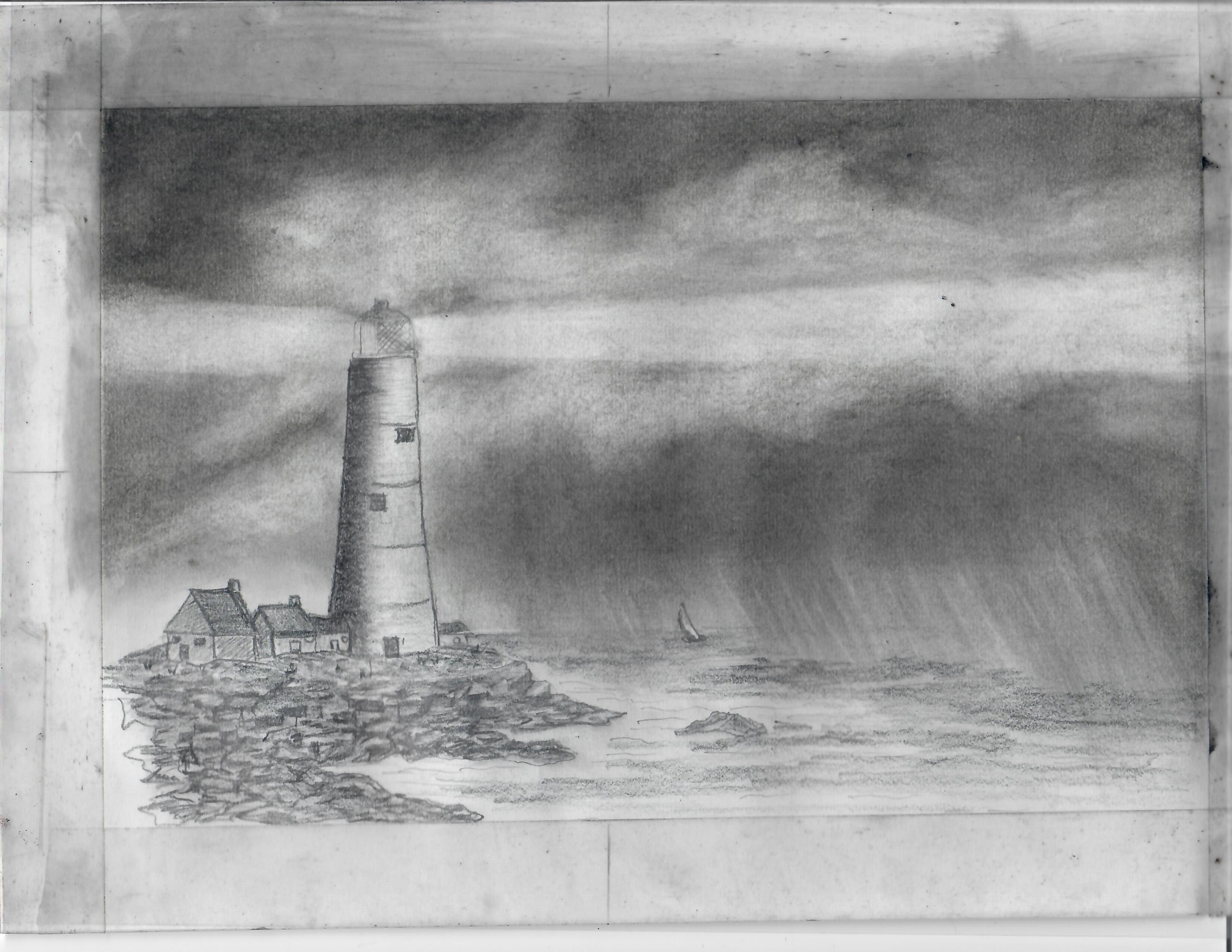
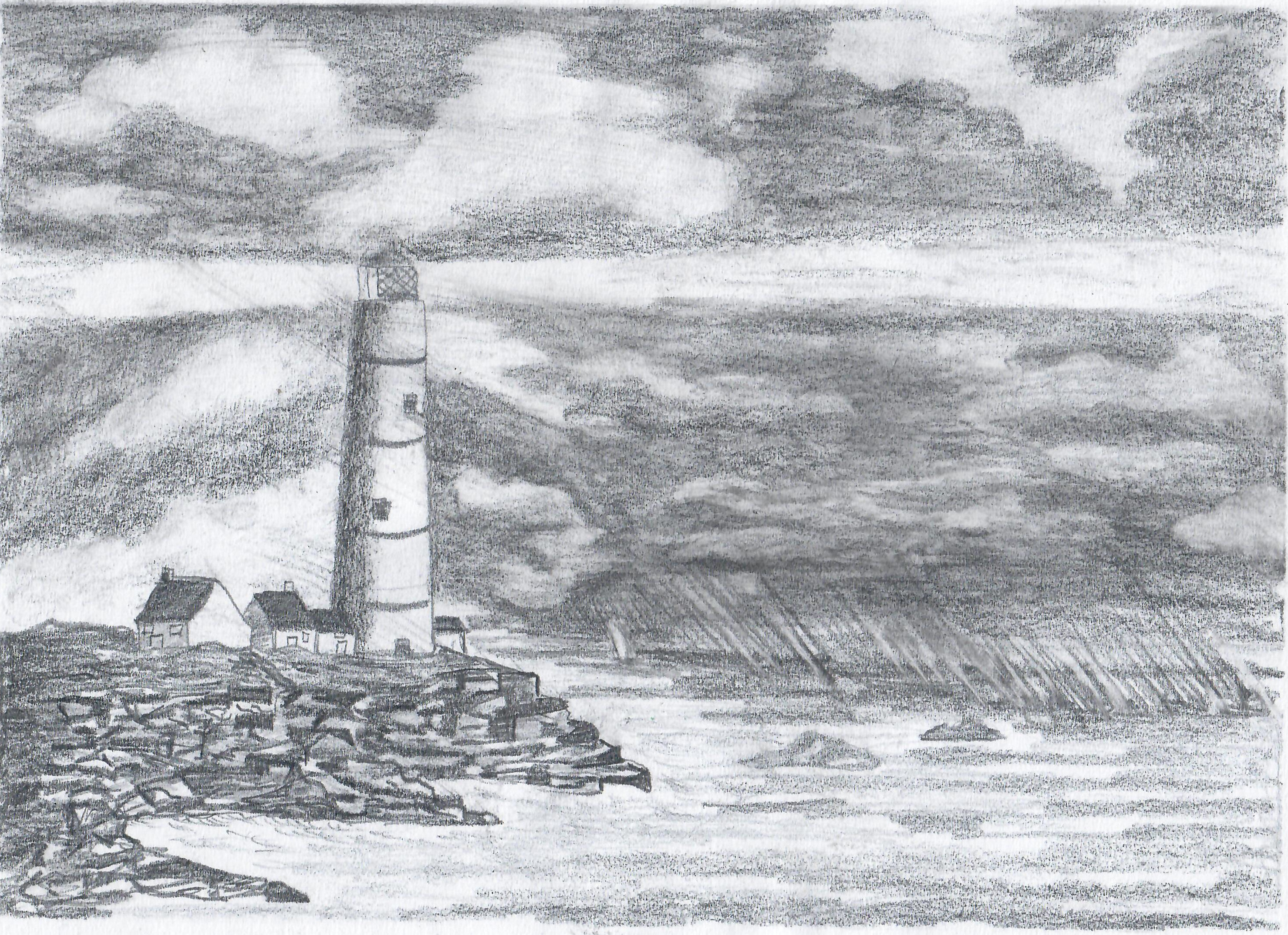
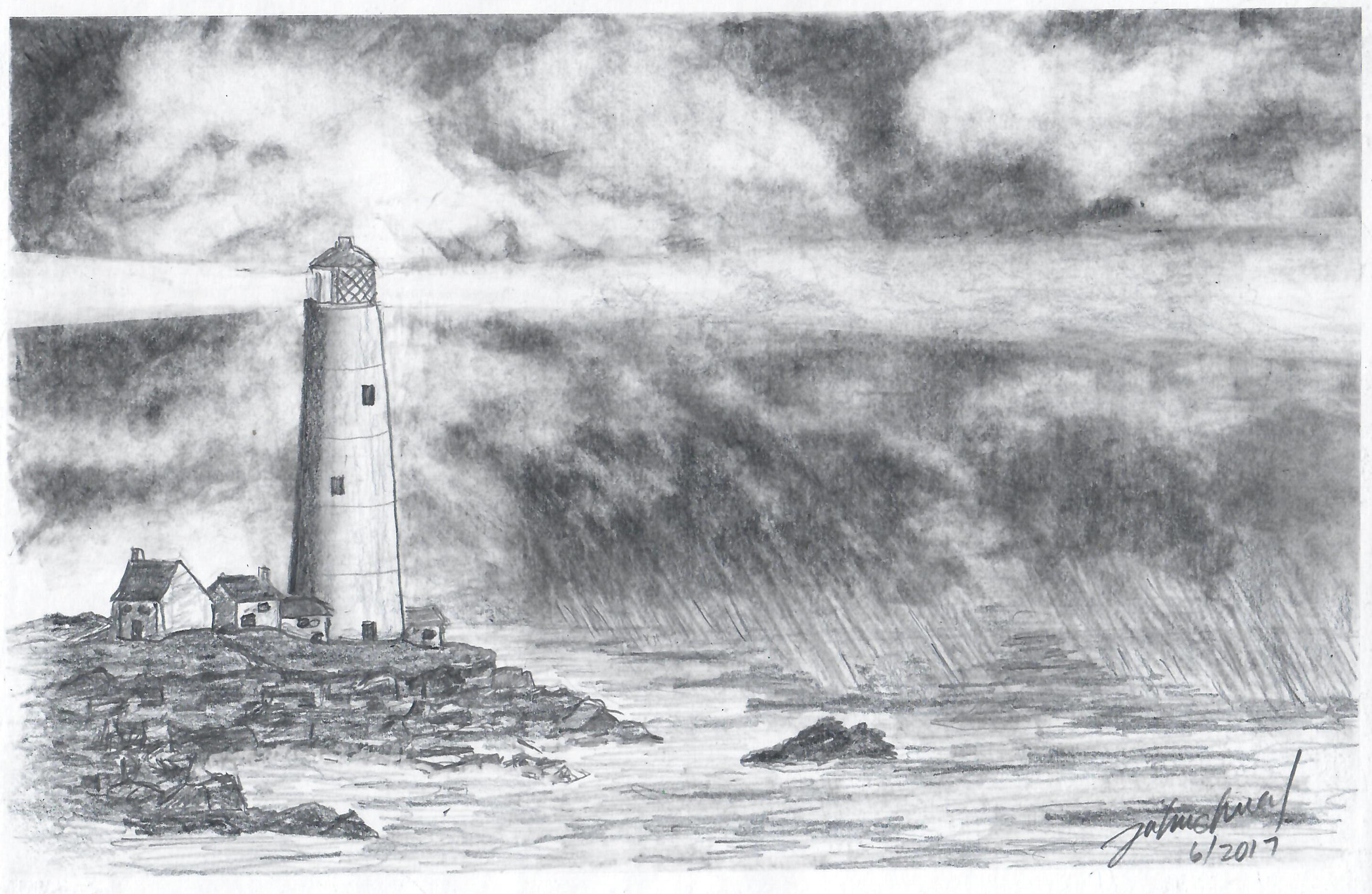
here's a series of sketches by John K. Chua (all
rights reserved). I'm pretty sure he was following
this tutorial on <a href="https://www.youtube.com/watch?v=0bDCeNWLZ3A">How to Draw a Lighthouse, the Sea
and Sky</a>, but I'm just guessing at the sequence of
these sketches.
</p>

<div class="gallery" id="org30e1a84">

<figure id="org2e1cd5c">
<a href="https://sachachua.com/blog/2025/02/looking-at-landscapes-art-and-iteration/scan0245.jpg"><img src="https://sachachua.com/blog/2025/02/looking-at-landscapes-art-and-iteration/thumb-scan0245.jpg" alt="thumb-scan0245.jpg"></a>

<figcaption><span class="figure-number">Figure 4: </span>A</figcaption>
</figure>


<figure id="org375f2a9">
<a href="https://sachachua.com/blog/2025/02/looking-at-landscapes-art-and-iteration/scan0246.jpg"><img src="https://sachachua.com/blog/2025/02/looking-at-landscapes-art-and-iteration/thumb-scan0246.jpg" alt="thumb-scan0246.jpg"></a>

<figcaption><span class="figure-number">Figure 5: </span>B</figcaption>
</figure>


<figure id="org2d3223f">
<a href="https://sachachua.com/blog/2025/02/looking-at-landscapes-art-and-iteration/scan0247.jpg"><img src="https://sachachua.com/blog/2025/02/looking-at-landscapes-art-and-iteration/thumb-scan0247.jpg" alt="thumb-scan0247.jpg"></a>

<figcaption><span class="figure-number">Figure 6: </span>C</figcaption>
</figure>


<figure id="org001b71e">
<a href="https://sachachua.com/blog/2025/02/looking-at-landscapes-art-and-iteration/scan0256.jpg"><img src="https://sachachua.com/blog/2025/02/looking-at-landscapes-art-and-iteration/thumb-scan0256.jpg" alt="thumb-scan0256.jpg"></a>

<figcaption><span class="figure-number">Figure 7: </span>D</figcaption>
</figure>


<figure id="org047a899">
<a href="https://sachachua.com/blog/2025/02/looking-at-landscapes-art-and-iteration/scan0248.jpg"><img src="https://sachachua.com/blog/2025/02/looking-at-landscapes-art-and-iteration/thumb-scan0248.jpg" alt="thumb-scan0248.jpg"></a>

<figcaption><span class="figure-number">Figure 8: </span>E</figcaption>
</figure>


<figure id="org7745a25">
<a href="https://sachachua.com/blog/2025/02/looking-at-landscapes-art-and-iteration/scan0254.jpg"><img src="https://sachachua.com/blog/2025/02/looking-at-landscapes-art-and-iteration/thumb-scan0254.jpg" alt="thumb-scan0254.jpg"></a>

<figcaption><span class="figure-number">Figure 9: </span>F</figcaption>
</figure>


<figure id="org38bbbc3">
<a href="https://sachachua.com/blog/2025/02/looking-at-landscapes-art-and-iteration/scan0259.jpg"><img src="https://sachachua.com/blog/2025/02/looking-at-landscapes-art-and-iteration/thumb-scan0259.jpg" alt="thumb-scan0259.jpg"></a>

<figcaption><span class="figure-number">Figure 10: </span>G</figcaption>
</figure>


<figure id="orgad64d60">
<a href="https://sachachua.com/blog/2025/02/looking-at-landscapes-art-and-iteration/scan0257.jpg"><img src="https://sachachua.com/blog/2025/02/looking-at-landscapes-art-and-iteration/thumb-scan0257.jpg" alt="thumb-scan0257.jpg"></a>

<figcaption><span class="figure-number">Figure 11: </span>H</figcaption>
</figure>


<figure id="org09f1696">
<a href="https://sachachua.com/blog/2025/02/looking-at-landscapes-art-and-iteration/scan0251.jpg"><img src="https://sachachua.com/blog/2025/02/looking-at-landscapes-art-and-iteration/thumb-scan0251.jpg" alt="thumb-scan0251.jpg"></a>

<figcaption><span class="figure-number">Figure 12: </span>I</figcaption>
</figure>


<figure id="org0df9e18">
<a href="https://sachachua.com/blog/2025/02/looking-at-landscapes-art-and-iteration/scan0255.jpg"><img src="https://sachachua.com/blog/2025/02/looking-at-landscapes-art-and-iteration/thumb-scan0255.jpg" alt="thumb-scan0255.jpg"></a>

<figcaption><span class="figure-number">Figure 13: </span>J</figcaption>
</figure>


<figure id="org617a198">
<a href="https://sachachua.com/blog/2025/02/looking-at-landscapes-art-and-iteration/scan0253.jpg"><img src="https://sachachua.com/blog/2025/02/looking-at-landscapes-art-and-iteration/thumb-scan0253.jpg" alt="thumb-scan0253.jpg"></a>

<figcaption><span class="figure-number">Figure 14: </span>K</figcaption>
</figure>


<figure id="orgf634438">
<a href="https://sachachua.com/blog/2025/02/looking-at-landscapes-art-and-iteration/scan0252.jpg"><img src="https://sachachua.com/blog/2025/02/looking-at-landscapes-art-and-iteration/thumb-scan0252.jpg" alt="thumb-scan0252.jpg"></a>

<figcaption><span class="figure-number">Figure 15: </span>L</figcaption>
</figure>

</div>

<p>
This was about half a year before his death.
Cancer meant he couldn't get out as much as he
used to, so he had to channel his passion for
photography and learning into something else. It's
interesting to see him experiment with the shapes
in the sky, the contrast and shape of the shore,
the rocks, the light from the lighthouse. He made
many other sketches and paintings, often with
several variations in the sketchbook. It would
have been nice to see what he could've done with
years more experimentation, but ah well.
</p>

<p>
While reading about art studies and iteration, I
came across these posts:
</p>

<ul class="org-ul">
<li><a href="https://monikazagrobelna.com/2022/01/06/what-are-art-studies-and-how-to-do-them/">What Are Art Studies and How to Do Them – Monika Zagrobelna</a>: with plenty of examples from anatomy</li>
<li><a href="https://stephenberryart.com/blog/2016/3/28/learning-through-iteration">Iterative Painting- Learning Through Experimentation and Critical Analysis — Stephen Berry Art</a>
<ul class="org-ul">
<li>work small</li>
<li>decide on one change at a time</li>
<li>separate technique from composition</li>
</ul></li>
</ul>

<p>
So yes, definitely a thing.
</p>

<p>
I've been having fun drawing more. I could pick a
tutorial, a Creative Commons image, or a public
domain image as a reference so I can freely share
my iterations. It'll be interesting to do that
kind of iteration. I'm not sure A+'s at the point
of being able to do that kind of study yet. I'm
not totally sure I'm at that point yet either. My
mind is often pulled in other directions by ideas
and novelty. I am definitely going to lose her if
I insist she repeats things.
</p>

<p id="interest-development">
That reminds me a little of another reflection
I've been noodling around on interest development.
The article <a href="https://alair.ala.org/server/api/core/bitstreams/0a340fae-0c02-4935-ba9f-680252dde95d/content" id="interest-development">Enhance Your Reference Skills by
Knowing the Four Phases of Interest Development</a>
and this <a href="https://stelar.edc.org/sites/default/files/2022-11/Day%202_Ann%20Renninger%20.pdf">presentation</a> mention that in the phase of
emerging personal interest, when people are
starting to become curious and independently
re-engage a topic, they're <b>not</b> particularly
interested in being advised on how to improve what
they've currently got. It's better to acknowledge
the effort they're putting in and to be patient.
So I might as well just learn beside her,
experimenting on my own stuff, letting her peek
in, and see where that takes us.
</p>

<p>
This is hard. But life is long (generally), and
she can learn things when she's ready. She can
<b>only</b> learn things when she's ready. There's
time. I didn't grow up particularly confident in
art. I still mostly draw stick figures. But to my
great surprise, I've managed to get paid for a few
of them as a grown-up, and I use them myself to
think and grow. Sometimes I discover myself
drawing for fun.
</p>

<p>
At 41 years, what am I ready to learn about art?
About life?
</p>

<p id="taste-gap">
I have that sense of discrepancy between my clumsy
lines and blobs and actions, and the shapes and
results I want. This is good. I can imagine that
there's something better, even if that's often
unclear, and it's not&#x2026; whatever this is. That is
<a href="https://www.youtube.com/watch?v=X2wLP0izeJE" id="taste-gap">the gap</a> between taste and skill that Ira Glass
described.
</p>

<blockquote>
<p>
Nobody tells this to people who are beginners, I
wish someone told me. All of us who do creative
work, we get into it because we have good taste.
But there is this gap. For the first couple years
you make stuff, it’s just not that good. It’s
trying to be good, it has potential, but it’s not.
But your taste, the thing that got you into the
game, is still killer. And your taste is why your
work disappoints you. A lot of people never get
past this phase, they quit. Most people I know who
do interesting, creative work went through years
of this. We know our work doesn’t have this
special thing that we want it to have. We all go
through this. And if you are just starting out or
you are still in this phase, you gotta know its
normal and the most important thing you can do is
do a lot of work. Put yourself on a deadline so
that every week you will finish one story. It is
only by going through a volume of work that you
will close that gap, and your work will be as good
as your ambitions. And I took longer to figure out
how to do this than anyone I’ve ever met. It’s
gonna take awhile. It’s normal to take awhile.
You’ve just gotta fight your way through.
</p>
</blockquote>

<p>
With any luck, I'm never going to outrun the gap.
An important part to learn (and share) is how to
let go of the frustration and self-doubt that get
in the way, so that we can get on with the
learning. That's hard. I am learning to
experiment, even if it looks like I'm only
changing a little bit at a time, and even if I
often go sideways or backwards more than forward.
I am trying to get better at sketching and taking
notes so that I can see things side by side. In
life, part of the challenge is figuring out the
characteristics of this quirky medium&#x2013;what it
permits at this particular moment. I just have to
keep trying, and observing, and thinking, and
changing; not quite the same thing again and again.
</p>

</div>
<div><a href="https://sachachua.com/blog/2025/02/looking-at-landscapes-art-and-iteration/index.org">View org source for this post</a></div><p>You can <a href="mailto:sacha@sachachua.com?subject=Comment%20on%20https%3A%2F%2Fsachachua.com%2Fblog%2F2025%2F02%2Flooking-at-landscapes-art-and-iteration%2F&body=Name%20you%20want%20to%20be%20credited%20by%20(if%20any)%3A%20%0AMessage%3A%20%0ACan%20I%20share%20your%20comment%20so%20other%20people%20can%20learn%20from%20it%3F%20Yes%2FNo%0A">e-mail me at sacha@sachachua.com</a>.</p>]]></content>
		</entry><entry>
		<title type="html">How to Take Smart Notes - Sonke Ahrens (2017)</title>
		<link rel="alternate" type="text/html" href="https://sachachua.com/blog/2024/10/how-to-take-smart-notes-sonke-ahrens-2017/"/>
		<author><name><![CDATA[Sacha Chua]]></name></author>
		<updated>2024-10-28T18:42:19Z</updated>
    <published>2024-10-28T18:42:19Z</published>
    <category term="visual-book-notes" />
<category term="writing" />
<category term="pkm" />
<category term="productivity" />
<category term="learning" />
		<id>https://sachachua.com/blog/2024/10/how-to-take-smart-notes-sonke-ahrens-2017/</id>
		<content type="html"><![CDATA[<p>
I want to get better at making sense of things and sharing what I'm learning.
Nudged by <a href="https://chrismaiorana.com/take-smart-notes/">Chris Maiorana's post on Second Brain, Second Nature</a>, I borrowed
<a href="https://www.soenkeahrens.de/en/takesmartnotes">How to Take Smart Notes</a> by Sönke Ahrens (2017). Here are my notes.
</p>

<p>
</p><div class="sketch-full"><a class="photoswipe" href="https://sketches.sachachua.com/filename/2024-10-26-01%20How%20to%20Take%20Smart%20Notes%20-%20Sonke%20Ahrens%202017%20%23visual-book-notes%20%23writing%20%23pkm%20%23book.png" data-src="https://sketches.sachachua.com/static/2024-10-26-01%20How%20to%20Take%20Smart%20Notes%20-%20Sonke%20Ahrens%202017%20%23visual-book-notes%20%23writing%20%23pkm%20%23book.png" data-title="2024-10-26-01 How to Take Smart Notes - Sonke Ahrens 2017 #visual-book-notes #writing #pkm #book" data-w="2808" data-h="3744"><picture>
      <img src="https://sketches.sachachua.com/static/2024-10-26-01%20How%20to%20Take%20Smart%20Notes%20-%20Sonke%20Ahrens%202017%20%23visual-book-notes%20%23writing%20%23pkm%20%23book.png" width="2808" height="3744" alt="2024-10-26-01 How to Take Smart Notes - Sonke Ahrens 2017 #visual-book-notes #writing #pkm #book" loading="lazy" style="max-height: 90vw; height: auto; width: auto" decoding="async">
      <figcaption>2024-10-26-01 How to Take Smart Notes - Sonke Ahrens 2017 #visual-book-notes #writing #pkm #book</figcaption>
    </picture></a></div>
<p></p>

<details class="code-details" style="padding: 1em;
                 border-radius: 15px;
                 font-size: 0.9em;
                 box-shadow: 0.05em 0.1em 5px 0.01em  #00000057;">
                  <summary><strong>Text from sketch</strong></summary>
<p>
How to Take Smart Notes - Sönke Ahrens. 2017 - sketched by Sacha Chua 2024-10-26-01
</p>

<ul class="org-ul">
<li>Niklas Luhmann: everything - writing; slipbox, Zettelkasten</li>
<li>Instead of: brainstorm (blank paper), then research (wrong topic? wrong understanding?), then write</li>
<li>Try a loop of:
<ul class="org-ul">
<li>Read with a pen in hand: short notes, your own understanding</li>
<li>Refine and connect your notes: elaborate.</li>
<li>Notice clusters</li>
<li>Develop into topics, write about them</li>
<li>reading ⇒ thinking ⇒writing</li>
</ul></li>
<li>Types of notes
<ul class="org-ul">
<li>Fleeting: try to review within a day</li>
<li>Permanent: complete sentences, makes sense at a glance</li>
<li>Literature: short; use own words</li>
<li>Project: can be archived after</li>
</ul></li>
<li>Work on multiple projects so you can switch between them and they can feed each other.</li>
<li>Things to think about.
<ul class="org-ul">
<li>Why is this interesting?</li>
<li>Why is this relevant?</li>
<li>How does this relate to other things?</li>
<li>What's not mentioned?</li>
</ul></li>

<li>Numbering, physical references: let ideas mingle
<ul class="org-ul">
<li>22, 22a, 22a1, 22b, 23, &#x2026;</li>
</ul></li>
<li>Retrieval cues</li>
<li>Saving cut pieces = easier editing</li>
<li>Verbund: by-products = resources</li>
<li>Writing → break it up!
<ul class="org-ul">
<li>reading, understanding, reflecting, getting ideas, connecting, distinguishing, rewording, structuring, organizing, editing, rewriting</li>
</ul></li>
<li>Positive feedback loop: reading with pen, writing permanent notes, writing arguments&#x2026;</li>
</ul>


</details>

<p>
The book goes into detail about Niklas Luhmann's Zettelkasten or slipbox system. Lots of people have written about Zettelkasten and various implementations. There's even a whole micro-industry around <a href="https://www.reddit.com/r/Startup_Ideas/comments/1dnfo9d/this_guy_makes_20kmonth_selling_notion_templates/">Notion templates</a>. So I won't spend a lot of time right now describing what it is or what the key aspects are. I can focus instead on what that means to me and what I want to do with it.
</p>
<div id="outline-container-org82e307a" class="outline-2">
<h3 id="org82e307a">Writing</h3>
<div class="outline-text-2" id="text-org82e307a">
<blockquote>
<p>
By doing everything with the clear purpose of writing about it, you will do what you do deliberately.
</p>
</blockquote>

<p>
I like chapter 5's focus on keeping writing in mind. I want to push most things towards writing and drawing (posts, code, whatever; public as much as possible) because it's a good way for me to remember and to learn from others. It's a reminder to not try speeding through my to-do list; it's good to slow down and write about stuff.
</p>
</div>
</div>
<div id="outline-container-org50bf1d7" class="outline-2">
<h3 id="org50bf1d7">Following the work</h3>
<div class="outline-text-2" id="text-org50bf1d7">
<blockquote>
<p>
I only do what is easy. I only write when I immediately know how to do it. If I falter for a moment, I put the matter aside and do something else.
</p>
</blockquote>

<blockquote>
<p>
I always work on different manuscripts at the same time. With this method, to work on different things simultaneously, I never encounter any mental blockages.
</p>
</blockquote>

<p>
During my discretionary time, I usually follow the
<a href="https://sachachua.com/blog/2017/03/what-did-i-learn-from-this-experiment-with-semi-retirement/#:~:text=butterflies%20of%20my%20interest">butterflies of my interest</a>: working on what I feel
like working on, moving on to something else when
I get stuck. Sometimes I will work on something I
have to do because it's got to be done, but those
moments are rarer. Amidst all those productivity
books that exhort you to focus on a limited number
of things, it was nice to know that Luhmann also
jumped from interest to interest, that the process
of accumulating these notes builds things up into
clusters with critical mass, and that these good
habits build themselves up through positive
feedback loops.
</p>
</div>
</div>
<div id="outline-container-org7302126" class="outline-2">
<h3 id="org7302126">Different types of notes</h3>
<div class="outline-text-2" id="text-org7302126">
<p>
I do all right capturing fleeting notes on my
phone, but I want to get better at turning my
fleeting notes into literature notes and permanent
notes. I'd like to review them more frequently and
spend some more time fleshing them out, with the
goal of eventually turning more of those things
into blog posts and code that I can share as I
learn out loud.
</p>

<p>
I also don't really have a good way of putting
topics "near" other topics yet. Categories are a
little coarse, but maybe <a href="https://sachachua.com/topic">topic maps</a> are a good
starting point. It would be nice to have a quick
way to put something before/after something else,
though.
</p>
</div>
</div>
<div id="outline-container-orgc4082d8" class="outline-2">
<h3 id="orgc4082d8">Different types of tasks</h3>
<div class="outline-text-2" id="text-orgc4082d8">
<blockquote>
<p>
Writing a paper involves much more than just typing on the keyboard. It also means reading, understanding, reflecting, getting ideas, making connections, distinguishing terms, finding the right words, structuring, organizing, editing, correcting and rewriting.
</p>
</blockquote>

<p>
I wonder if making these distinctions between the subtasks of writing will make it easier for me to break writing down into tiny tasks that can be completed and gotten out of my brain.
</p>
</div>
</div>
<div id="outline-container-orgca99960" class="outline-2">
<h3 id="orgca99960">Thinking about connections, thinking about what's missing</h3>
<div class="outline-text-2" id="text-orgca99960">
<p>
I want to get better at connecting ideas to other
things I've thought about by linking to blog posts
or notes. That might also help me build up
thoughts out of smaller chunks, which would be
helpful when it comes to <a href="https://sachachua.com/blog/2015/06/working-with-fragmented-thoughts/">working with fragmented
thoughts</a>.
</p>

<p>
Thinking about what's not in the picture is hard,
and that kind of critical thinking is something I
want to practise more. I can pay attention to the
follow-up questions I have so that I can get a
sense of where to look for more insights or what
to experiment with. Questioning the way something
is framed is also good and something I don't do often enough.
</p>

<p>
For example, I wanted to dig into this quote:
</p>

<blockquote>
<p>
Luhmann’s only real help was a housekeeper who cooked for him and his children during the week, not that extraordinary considering he had to raise three children on his own after his wife died early.
</p>
</blockquote>

<p>
I ended up doing a tiny bit of research on my phone and putting it into <a href="https://sachachua.com/blog/2024/10/niklas-luhmann-s-zettelkasten-and-life-with-kids/">Niklas Luhmann's Zettelkasten and life with kids</a> (the kids were in their teens at the time, so they were probably a lot more independent than A+ is at the moment).
</p>
</div>
</div>
<div id="outline-container-org46a8f0e" class="outline-2">
<h3 id="org46a8f0e">Related</h3>
<div class="outline-text-2" id="text-org46a8f0e">
<ul class="org-ul">
<li><a href="https://www.soenkeahrens.de/en/takesmartnotes">How to Take Smart Notes</a> by Sönke Ahrens (2017) - author's website</li>
<li><a href="https://sachachua.com/blog/2012/03/visual-book-notes-how-to-read-a-book/">Sketchnote: How to Read a Book</a> - also talks about thinking about the Great Conversation between books</li>
<li><a href="https://sachachua.com/blog/2013/10/visual-book-review-how-to-make-a-complete-map-of-every-thought-you-think-lion-kimbro/">Sketchnote: How to make a complete map of every thought you think (Lion Kimbro)</a> - pan-subject speeds: fleeting notes; map</li>
<li><a href="https://sachachua.com/blog/2015/03/sketched-book-write-faster-write-better-david-fryxell/">Sketchnote: Write Faster, Write Better – David A. Fryxell</a> - shuffling ideas on index cards feels related to the slipbox</li>
</ul>
</div>
</div>
<div><a href="https://sachachua.com/blog/2024/10/how-to-take-smart-notes-sonke-ahrens-2017/index.org">View org source for this post</a></div>
<p>You can <a href="mailto:sacha@sachachua.com?subject=Comment%20on%20https%3A%2F%2Fsachachua.com%2Fblog%2F2024%2F10%2Fhow-to-take-smart-notes-sonke-ahrens-2017%2F&body=Name%20you%20want%20to%20be%20credited%20by%20(if%20any)%3A%20%0AMessage%3A%20%0ACan%20I%20share%20your%20comment%20so%20other%20people%20can%20learn%20from%20it%3F%20Yes%2FNo%0A">e-mail me at sacha@sachachua.com</a>.</p>]]></content>
		</entry><entry>
		<title type="html">Working with the flow of ideas</title>
		<link rel="alternate" type="text/html" href="https://sachachua.com/blog/2023/12/2023-12-25-07-flow-of-ideas-writing-metaphor/"/>
		<author><name><![CDATA[Sacha Chua]]></name></author>
		<updated>2023-12-31T02:15:18Z</updated>
    <published>2023-12-31T02:15:18Z</published>
    <category term="speechtotext" />
<category term="metaphor" />
<category term="life" />
<category term="blogging" />
<category term="writing" />
<category term="kaizen" />
		<id>https://sachachua.com/blog/2023/12/2023-12-25-07-flow-of-ideas-writing-metaphor/</id>
		<content type="html"><![CDATA[<p>
</p><div class="sketch-full"><a class="photoswipe" href="https://sketches.sachachua.com/filename/2023-12-25-07%20Flow%20of%20ideas%20%23writing%20%23metaphor.png" data-src="https://sketches.sachachua.com/static/2023-12-25-07%20Flow%20of%20ideas%20%23writing%20%23metaphor.png" data-title="2023-12-25-07 Flow of ideas #writing #metaphor" data-w="2808" data-h="3744"><picture>
      <img src="https://sketches.sachachua.com/static/2023-12-25-07%20Flow%20of%20ideas%20%23writing%20%23metaphor.png" width="2808" height="3744" alt="2023-12-25-07 Flow of ideas #writing #metaphor" loading="lazy" style="max-height: 90vw; height: auto; width: auto" decoding="async">
      <figcaption>2023-12-25-07 Flow of ideas #writing #metaphor</figcaption>
    </picture></a></div>
<p></p>

<details class="code-details" style="padding: 1em;
                 border-radius: 15px;
                 font-size: 0.9em;
                 box-shadow: 0.05em 0.1em 5px 0.01em  #00000057;">
                  <summary><strong>Text from sketch</strong></summary>
<p>
2023-12-25-07
</p>

<p>
Flow of ideas
</p>

<p>
What can I learn from thinking about the flow rate?
</p>

<p>
input &gt; output, and that's okay
</p>

<p>
Parts:
</p>

<ul class="org-ul">
<li>idea: agenda/review?</li>
<li>capture: refile to tags</li>
<li>toot: use this more, get stuff out</li>
<li>braindump: use transcripts or outline</li>
<li>sketch: bedtime</li>
<li>post: cut off earlier, can follow up</li>
<li>video: workflow tweaks</li>
</ul>

<p>
Thoughts:
</p>

<ul class="org-ul">
<li>more input is not always better; already plenty, not limiting factor</li>
<li>prioritize, review</li>
<li>overflow: add notes and pass it along, if poss.</li>
<li>can add things later (results, sketches, posts, videos)</li>
<li>manage expectations; minimize commitments</li>
<li>favour small things that flow easily</li>
<li>collect things in a container
<ul class="org-ul">
<li>tags, outlines</li>
<li>posts, videos</li>
</ul></li>
<li>minimize filing, but still find related notes</li>
<li>become more efficient and effective</li>
</ul>

<p>
The heap:
</p>

<ul class="org-ul">
<li>Org dates have been working for time-sensitive/urgent things</li>
<li>Lots of discretionary things get lost in the shuffle
<ul class="org-ul">
<li>waste info collected but forgotten</li>
<li>half-finished posts that have gone stale</li>
<li>redoing things</li>
<li>late replies to conversations</li>
<li>things that are just in my config - some people still find them, so that's fine</li>
</ul></li>
</ul>

<p>
Next: toot more experiment with braindumping, video
</p>


</details>

<p>
I come up with way more ideas than I can work on, and that's okay.
That's good. It means I can always skim the top for interesting
things, and it's fine if things overflow as long as the important
stuff stays in the funnel. I'm experimenting with more ways to keep
things flowing.
</p>

<p>
I usually come up with lots of ideas and then revisit my priorities to
see if I can figure out 1-3 things I'd like to work on for my next
focused time sessions. These priorities are actually pretty stable for
the most part, but sometimes an idea jumps the queue and that's okay.
</p>

<p>
There's a loose net of projects/tasks that I'm currently working on
and things I'm currently interested in, so I want to connect ideas and
resources to those if I can. If they aren't connected, or if they're
low-priority and I probably won't get to them any time soon, it can
make a lot of sense to add quick notes and pass it along.
</p>

<p>
For things I want to think about some more, <a href="https://sachachua.com/blog/2023/12/audio-braindump-workflow-tweaks-adding-org-mode-hyperlinks-to-recordings-based-on-keywords/">my audio braindumping
workflow</a> seems to be working out as a way to capture lots of text
even when I'm away from my computer. I also have a bit more time to
sketch while waiting for the kiddo to get ready for bed. I can use the
sketchnotes as outlines to talk through while I braindump, and I can
take my braindumps and distill them into sketches. Then I can take
those and put them into blog posts. Instead of getting tempted to add
more and more to a blog post (just one more idea, really!), I can try
wrapping up earlier since I can always add a follow-up post. For some
things, making a video might be worthwhile, so smoothing out my
workflow for creating a video could be useful. I don't want to spend a
lot of time filing but I still want to be able to find related notes,
so <a href="https://sachachua.com/blog/2023/12/automatically-refiling-org-mode-headings-based-on-tags/">automatically refiling based on tags</a> (or possibly suggesting refile
targets based on vector similarity?) might help me shift things out of
my inbox.
</p>

<p>
I'm generally not bothered by the waste of coming up with ideas that I
don't get around to, since it's more like daydreaming or fun. I
sometimes get a little frustrated when I want to find an interesting
resource I remember coming across some time ago and I can't find it
with the words I'm looking for. Building more of a habit of capturing
interesting resources in my Org files and using my own words in the
notes will help while I wait for personal search engines to get
better. I'm a little slow when it comes to e-mails because I tend to
wait until I'm at my computer&#x2013;and then when I'm at my computer, I
prefer to tinker or write. I occasionally redo things because I didn't
have notes from the previous solution or I couldn't find my notes.
That's fine too. I can get better at taking notes and finding them.
</p>

<p>
So I think some next steps for me are:
</p>

<ul class="org-ul">
<li>Post more toots on <a href="https://emacs.ch/@sachac/">@sachac@emacs.ch</a>; might be useful as a firehose for ideas. Share them back to my Org file so I have a link to the discussion (if any). Could be a quick way to see if anyone already knows of related packages/code or if anyone might have the same itch.</li>
<li>See if I can improve my braindumping/sketch workflow so that I can flesh out more ideas</li>
<li>Tweak my video process gradually so that I can include more screenshots and maybe eventually longer explanations</li>
</ul>
<p>You can <a href="mailto:sacha@sachachua.com?subject=Comment%20on%20https%3A%2F%2Fsachachua.com%2Fblog%2F2023%2F12%2F2023-12-25-07-flow-of-ideas-writing-metaphor%2F&body=Name%20you%20want%20to%20be%20credited%20by%20(if%20any)%3A%20%0AMessage%3A%20%0ACan%20I%20share%20your%20comment%20so%20other%20people%20can%20learn%20from%20it%3F%20Yes%2FNo%0A">e-mail me at sacha@sachachua.com</a>.</p>]]></content>
		</entry><entry>
		<title type="html">Revisiting stenography and Twiddling</title>
		<link rel="alternate" type="text/html" href="https://sachachua.com/blog/2023/01/revisiting-stenography-and-twiddling/"/>
		<author><name><![CDATA[Sacha Chua]]></name></author>
		<updated>2023-01-24T15:02:06Z</updated>
    <published>2023-01-24T15:02:06Z</published>
    <category term="learning" />
<category term="steno" />
<category term="twiddler" />
<category term="geek" />
		<id>https://sachachua.com/blog/2023/01/revisiting-stenography-and-twiddling/</id>
		<content type="html"><![CDATA[<p>
I've been thinking about what I can learn alongside A+ - something
that will be slow to learn but that might be fun to get the hang of. I
think it will help me practise patience and develop my empathy with
her as she learns fine motor skills too. Maybe I'll even be able to
model persistence and self-acceptance.
</p>

<p>
At home, I practise steno on my Georgi keyboard while she does her
homework, learns how to type, or writes stories. It works out pretty
well, since I have to sound out words to chord them and I fingerspell
slower than she types. I steno the words she wants me to spell for
her, and I also steno the instructions on her homework. I steno my
journal entries, too. I'd like to someday be able to write blog posts
with steno. Not that I'm speed-limited now, but I'm curious about it
and it's good to show A+ that I'm learning too. I made a webpage that
lets me steno large text into a small textarea on my Android phone
using <a href="https://github.com/nimble0/dotterel">Dotterel</a>, displaying my cheat sheet and steno hints for the last
few words using the <a href="https://github.com/didoesdigital/steno-dictionaries/blob/master/dictionaries/dict.json">main typeytype dictionary</a>. That way, I can
fingerspell words for A+ and then practise them as she copies the
words. I'm also slowly going through <a href="https://www.artofchording.com/">The Art of Chording</a>.
</p>

<p>
I've also dusted off my Twiddler 2 one-handed chording keyboard, since
that's something I can do while looking elsewhere. Looking outside
makes me feel a little happier in winter. Maybe I'll even figure out
how to write while waiting for her outside, perhaps bundling up my
hand in a small blanket to keep warm. I mostly remembered how to chord
with my right hand using the default layout, but I wanted to
experiment with alternative layouts. I started learning a modified
<a href="https://github.com/AlexBravo/Twiddler">Backspice layout</a>, moving some letters around since I can't easily
reach <code>000L</code> with my short pinky. I couldn't download the Twiddler 2.1
configuration tool from the Tekgear website, so I just programmed it
interactively.
</p>

<p>
To practice on the go, I set up Emacspeak in a Debian instance on
<a href="https://play.google.com/store/apps/details?id=tech.ula&amp;hl=en_CA&amp;gl=US">UserLAnd</a> on my Android phone, with audio output routed using
pulseaudio to <a href="https://play.google.com/store/apps/details?id=x.org.server&amp;hl=en_CA&amp;gl=US">XServer XSDL</a> via <code>export
PULSE_SERVER=tcp:127.0.0.1:4713</code> in my UserLAnd <code>~/.profile</code>. It
worked surprisingly well. I could press chords and hear what letter I
typed. When I pressed SPC, I heard the word read out. This was enough
for me to be able to explore the layout and think of words I want to
spell with the letters I've found so far. I've been having a hard time
figuring out how to easily get files in and out of UserLAnd aside from
scp, though, as the document provider doesn't seem to show up for me.
</p>

<p>
So I wrote a web-based tool that uses the Javascript Web Speech API to
speak each letter as I type it and speak out the word after I press
space&#x2013;basically, the main things that I'd been using Emacspeak for. I
also added a little cheat sheet that I could update on the fly, and I
can have it read aloud by typing <code>hlp</code> and pressing SPC. I like this
more self-directed, exploratory approach to learning the keymap. I
press a chord and hear what letter it is, then think of words I want
to spell with it and where those letters are. Here it is:
<a href="https://sachachua.com/blog/2023/01/revisiting-stenography-and-twiddling/twiddler.html">twiddler.html</a> (might not work on all browsers - I use it on Chrome on
Android)
</p>

<p>
Based on conversations on Mastodon, I decided to get the <a href="https://twiddler.tekgear.com/">Twiddler 3
Wrap + Bluetooth</a>. I wonder if the Twiddler 3 will make it easier for
me to reach the far button with my pinky finger, and I'm curious if
Bluetooth can still get through however many layers I want to have so
that I don't get too cold. I probably won't use the Twiddler to write
stuff while ostensibly standing around with the other grown-ups at a
playdate. It's good for kids to see grown-ups being friends. But if
there's standing-around time while she's off being independent, or if
I want to look outside, it might be interesting to use.
</p>

<p>
A+ sometimes gets frustrated with how slow writing is, or how she gets
tripped up by a 3x3 perm she wants to learn. I'm glad I can slow down
and learn something along with her.
</p>
<p>You can <a href="mailto:sacha@sachachua.com?subject=Comment%20on%20https%3A%2F%2Fsachachua.com%2Fblog%2F2023%2F01%2Frevisiting-stenography-and-twiddling%2F&body=Name%20you%20want%20to%20be%20credited%20by%20(if%20any)%3A%20%0AMessage%3A%20%0ACan%20I%20share%20your%20comment%20so%20other%20people%20can%20learn%20from%20it%3F%20Yes%2FNo%0A">e-mail me at sacha@sachachua.com</a>.</p>]]></content>
		</entry><entry>
		<title type="html">Reflecting on wasted effort</title>
		<link rel="alternate" type="text/html" href="https://sachachua.com/blog/2021/12/reflecting-on-wasted-effort/"/>
		<author><name><![CDATA[Sacha Chua]]></name></author>
		<updated>2021-12-20T07:01:56Z</updated>
    <published>2021-12-20T07:01:56Z</published>
    <category term="kaizen" />
		<id>https://sachachua.com/blog/2021/12/reflecting-on-wasted-effort/</id>
		<content type="html"><![CDATA[<p>
</p><div class="sketch-full"><a class="photoswipe" href="https://sketches.sachachua.com/filename/2021-12-19%20Waste.jpg" data-src="https://sketches.sachachua.com/static/2021-12-19%20Waste.jpg" data-title="2021-12-19 Waste" data-w="2520" data-h="1688"><picture>
      <img src="https://sketches.sachachua.com/static/2021-12-19%20Waste.jpg" width="2520" height="1688" alt="2021-12-19 Waste" loading="lazy" style="max-height: 90vw; height: auto; width: auto" decoding="async">
      <figcaption>2021-12-19 Waste</figcaption>
    </picture></a></div>
<p></p>

<p>
One way to look for ways to improve is to think about where the waste might be. I wanted to reflect on how I'm currently doing things and where I might be wasting effort.
</p>

<ul class="org-ul">
<li><b>Not noticing an opportunity:</b> There's not noticing that there's an opportunity to improve or not seeing that something that I can do that takes advantages of something I'm already doing.</li>

<li><b>Working on the wrong thing:</b> If I pick something less effective to
work on, I waste a little opportunity. Something might be a bad fit
if it bumps into my weaknesses or doesn't take advantage of my
strengths. Maybe I'm picking the wrong problem to work on, or I'm
taking the wrong approach, or I haven't prepared, or I'm working on
something that may be high effort and low reward. It's usually not a
big deal, but it helps to think a little bit about which tasks can
lead to compounding benefits and which are one-offs that don't help
as much.</li>

<li><b>Working at the wrong time:</b> I feel a little slower working on something when I'm not in the right mindset or I'm not as interested in it as in other things I could be doing. It's also tough when I don't have enough energy to work on things. It's important to notice when I'm getting into the negative productivity zone, especially when coding. If I pick the wrong time to work on something, I might have to deal with lots of interruptions or distractions.</li>

<li><b>Context-switching:</b> Context-switching is a particularly big
challenge for me because I'm basically working with one to two hour
chunks possibly separated by days or months. For example, if I start
something on Tuesday and then I pick it up again on Friday, I need
to do a fair bit of rethinking and remembering. Switching from one
thing to another is hard. I'm always looking up how to do something
in the specific language that I need to work with. It's related to the problem of&#x2026;</li>

<li><b>Duplicate research:</b> Sometimes I have to reread the resources that
would help me prepare for that task.</li>

<li><b>Tunnel vision:</b> On the flip side, focusing too much on one project means not thinking about other things. Everything else tends to be in the back burner because of context switching costs, and that sometimes leads to&#x2026;</li>

<li><b>Letting an opportunity lapse:</b> Sometimes it's too late to get the
most out of something because a person who wanted it has moved on
(including me) or because I'd completely forgotten the context of my
notes. This also applies to real life, too. A- is not going to want
to hang out with me forever, so I should make the most of it. =)</li>

<li><b>Forgetting the context:</b> Quick notes are sometimes too quick.</li>

<li><b>Fragmented time:</b> Since I need to work in short bursts, I have to get to a good stopping point. That can be tough.</li>

<li><b>Frittering away time on distractions:</b> It can also be tough working on something that doesn't fit into five minutes here, five minutes there. There's a big temptation to fritter time away on distractions like scrolling through Reddit, or just working on small, easy stuff instead of thinking about the harder problems.</li>

<li><b>Repetitive steps that could be automated:</b> Waste could also be working on things that the computer could be working on instead.</li>

<li><b>Not making the most of it:</b> If I'm not paying attention, I might not get as much out of an experience or task as I could have.</li>

<li><b>Not harvesting notes/code:</b> It's very tempting sometimes to try to
work quickly and just solve the problem for today. But if I take a
little bit of extra time to harvest my notes from it, then I might
be able to solve that problem when I run into the same problem,
six months later or something like that.</li>

<li><b>Doing more than needed:</b> The principle of You Ain't Gonna Need It often comes into play here, especially if I need to squeeze things down to fit into the chunks of time I have.</li>

<li><b>Missing pieces, incomplete notes:</b> If I write something incomplete, I might have to redo more of it when I want to reuse it or build on it.</li>

<li><b>Forgetting where to find something:</b> If I can't even remember the
keywords needed to find something, that's even more of a waste of
good notes.</li>

<li><b>Mistakes:</b> Mistakes happen, and that's another source of wasted effort. If I'm in a rush or if I'm being impatient, I am not very good at paying attention to details. Then, when I need to go back and fix things, I have to deal with the context-switching all over again.</li>

<li><b>Doing things that might be a better fit for other people:</b> So if
there's something that can be done by somebody who's more
detail-oriented or who has more time to look at all the small things
or who has those particular skills or interests, it's better for
them to do it. Then I can focus on the stuff that fits me.</li>

<li><b>Limits of tools:</b> If I'm coding, doing it on my laptop with maybe two side-by-side windows is not quite as effective as plugging into the external monitor and getting all the things set up so I can see things instead of switching between overlapping things.</li>

<li><b>Having things in a form that's hard to search or skim:</b> Videos and
sketches can be hard to search or skim, so sometimes it makes sense
to go back and actually write the text for it.</li>

<li><b>Negative feelings:</b> For example, if the kiddo really wants my
attention and I'm trying to complete a thought, it's tough not to
get frustrated by the interruptions. It helps to be able to pull
myself back and actually focus on her because there's no getting
around that anyway, and then to do my thing later. It's also good to
not let that frustration linger, because then that gets in the way
of both enjoying her company and being able to focus on my own thing
afterwards.</li>
</ul>

<p>
Now to think a little more closely about my main challenges&#x2026;
</p>

<p>
Dealing with the fragmentation of my time is a big challenge. The way that I might do that is by grouping tasks together, so I don't have to switch context so much. Tunnel vision hasn't been too much of a problem for me so far, although it does mean that some things don't get worked on for a long time. 
</p>

<p>
Taking a little bit of extra time to write up my notes makes sense,
although it means my chunks of coding time have to be even shorter.
Extracting excerpts for literate programming posts is a bit tough if I need to think about how to provide enough context. Maybe I should let myself fill things in later. I'm also looking into ways to do that faster, like maybe auto-generated captions running in the background so I can think out loud, grab the transcript, and then edit it a little bit (like this post). We'll see how that goes. 
</p>

<p>
It makes sense to invest some time into expanding my toolset, like learning more about my tools, automating things, or taking advantage of hardware or software.
</p>

<p>
Of course, I'm still probably going to run into mistakes along the
way, but if I can figure out which things are not as good for me, then
I can see if other people want to go pick them up.
</p>

<p>
Might be a reasonable plan for reducing waste. Let's see how it works out.
</p>
<p>You can <a href="mailto:sacha@sachachua.com?subject=Comment%20on%20https%3A%2F%2Fsachachua.com%2Fblog%2F2021%2F12%2Freflecting-on-wasted-effort%2F&body=Name%20you%20want%20to%20be%20credited%20by%20(if%20any)%3A%20%0AMessage%3A%20%0ACan%20I%20share%20your%20comment%20so%20other%20people%20can%20learn%20from%20it%3F%20Yes%2FNo%0A">e-mail me at sacha@sachachua.com</a>.</p>]]></content>
		</entry><entry>
		<title type="html">Using some babysitting time for personal projects</title>
		<link rel="alternate" type="text/html" href="https://sachachua.com/blog/2019/04/using-some-babysitting-time-for-personal-projects/"/>
		<author><name><![CDATA[Sacha Chua]]></name></author>
		<updated>2019-04-23T08:41:06Z</updated>
    <published>2019-04-23T03:45:13Z</published>
    <category term="geek" />
<category term="kaizen" />
		<id>https://sachachua.com/blog/?p=29396</id>
		<content type="html"><![CDATA[<p>After A- headed out the door with the babysitter, I resisted the urge to work on consulting projects and picked a few personal projects instead. I organized and published another <a href="https://sachachua.com/blog/category/emacs-news">Emacs News</a> post, then settled in for some coding.</p>
<p>I made good progress on using <a href="https://developers.google.com/web/tools/puppeteer/">Puppeteer</a> to automate renewing my library books. I even packaged it up as a Docker image, pushed it to my Linode server, and successfully ran it there. Hooray! That means we&#8217;re one step closer to getting A- her own library card, since I&#8217;ll be able to renew items on both of our cards without the hassle of logging in and out of various accounts on my phone.</p>
<p>So far, so good. The ROI doesn&#8217;t make straightforward sense &#8211; I wouldn&#8217;t each up enough overdue fines to balance the opportunity cost from not consulting &#8211; but learning how to automate headless browsers will open up a lot more web automation possibilities, and extra practice wrapping it in a Docker container was a nice bonus. And yeah, turning three minutes of mild annoyance every few days or so into something more automated will probably be worthwhile. The next steps are for me to turn it into a cronjob so that my server can run it daily, and to test to make sure it works when a book can&#8217;t be renewed.</p>
<p>I also wanted to prepare for doing <a href="https://sachachua.com/blog/tag/emacs-hangout/">Emacs Hangouts</a> again. It turns out that my Logitech H800 Bluetooth headset microphone doesn&#8217;t work properly on Ubuntu Bionic. Something about HFP and PulseAudio. At least audio output works, so that will reduce the feedback. I just finished <code>apt-get dist-upgrade</code> when A- returned with the babysitter, so I&#8217;ll work on this again next time.</p>
<p>Alternating consulting sessions with personal projects seems like a good plan. It feels a little indulgent, but so did my <a href="https://sachachua.com/blog/category/experiment">experiment with semi-retirement</a> when I was just starting, and that worked out really well for us.</p>
<p>This babysitting setup seems to work well for us considering A-&#8216;s late schedule and shifting interests. A 5-hour session gives me enough time to dig into a challenge or learn a new skill. A- seems to need more connection time after babysitting (probably letting off the tension from behaving so well with a new person all afternoon), but that&#8217;s perfectly okay.</p>
<p>I&#8217;ve liked spending all this time with A-, and I like the little stories I pick up from watching her learn every day. At the playground, she was so proud of being able to climb over the top of the climbing structure by herself. But these moments belong to her, not to me, so it&#8217;s okay for me to step back and have my own moments. Part of her journey as a child is separating herself from me, and part of my journey as a parent is separating myself from her.</p>
<p>Slowly, slowly, slowly making time for my own things again!</p>
<p>Update 12:39 AM: It looks like Bluetooth headset microphones are not really working on Linux these days, so I&#8217;ll just use the headset to listen in order to reduce feedback, and I&#8217;ll use my Yeti microphone if I set up for an Emacs Hangout or Emacs Chat session.</p>


<p></p>
<p>You can <a href="mailto:sacha@sachachua.com?subject=Comment%20on%20https%3A%2F%2Fsachachua.com%2Fblog%2F2019%2F04%2Fusing-some-babysitting-time-for-personal-projects%2F&body=Name%20you%20want%20to%20be%20credited%20by%20(if%20any)%3A%20%0AMessage%3A%20%0ACan%20I%20share%20your%20comment%20so%20other%20people%20can%20learn%20from%20it%3F%20Yes%2FNo%0A">e-mail me at sacha@sachachua.com</a>.</p>]]></content>
		</entry><entry>
		<title type="html">How A- is helping me learn how to read better</title>
		<link rel="alternate" type="text/html" href="https://sachachua.com/blog/2019/04/how-a-is-helping-me-learn-how-to-read-better/"/>
		<author><name><![CDATA[Sacha Chua]]></name></author>
		<updated>2019-04-17T16:08:15Z</updated>
    <published>2019-04-17T12:07:48Z</published>
    <category term="parenting" />
<category term="reading" />
		<id>https://sachachua.com/blog/?p=29393</id>
		<content type="html"><![CDATA[<p>A- loves books. They&#8217;re usually a good way to calm her down from a tantrum, enjoy a pleasant afternoon, and get her all snuggled in and sleepy at bedtime. I don&#8217;t mind reading them again and again, since each read gives me an opportunity to learn more about writing, illustration, and even layout. It&#8217;s so much fun hearing the words and ideas from books bubble up in our everyday conversations.</p>
<p>I&#8217;d like to learn more about best practices for reading with young kids, like dialogic reading. A- responds well to the comments I add pointing out feelings or relating things to her life, and she often asks about things when I leave plenty of space for her to jump in.</p>
<p>A- doesn&#8217;t like feeling quizzed, though. When I pause to let her fill in blanks or I ask her questions, she protests, &#8220;I&#8217;m the baby.&#8221; By that, she means, &#8220;You&#8217;re the adult. Read it properly.&#8221; She knows the books and will sometimes &#8220;read&#8221; the whole thing to herself from memory, but sometimes she probably just wants to relax and listen. Sometimes she&#8217;ll play along if I give her a special word and ask her to point to it whenever it comes up,  but that&#8217;s hit-or-miss. If she wants to play the game of correcting me, she&#8217;ll ask me to read the book upside down.</p>
<p>I think I&#8217;ll focus on making space for her questions and letting her take the lead for now, instead of taking more of a teaching-ish approach. I can model questions by wondering out loud. We can just keep it really pleasant, and probably that will pave the way for phonics later on. It&#8217;s totally okay for her kindergarten teacher to do the heavy lifting of teaching her how to read. My job is to help her want to read.</p>
<p>It might be nice to be more intentional about the books we get. Our neighbourhood library has a good selection, but there are all sorts of gems out there that we might not find just by pulling books off the shelf.</p>
<p>I can thin the herd a bit by bringing some of our books to the Children&#8217;s Book Bank, so that her shelf isn&#8217;t so packed. Then it might be easier for her to find and pull out  books she likes.</p>
<p>A little thing: if I update the script I wrote to renew my library loans so that it works with the redesigned site, that could save me a bit of clicking.</p>
<p>I can look for ways to perk myself up if I&#8217;m falling asleep reading during the afternoon slump. A- usually accepts it if I tell her that I need to move or do something different, and maybe a dance session could help us get our blood flowing. I can also drink water and eat a quick snack. I can invite her to read a book outside or explore the garden, especially as the weather warms up.</p>
<p>This is great! I&#8217;m learning how to read, too. :)</p>
<p>You can <a href="https://sachachua.com/blog/2019/04/how-a-is-helping-me-learn-how-to-read-better/#comment">view 2 comments</a> or <a href="mailto:sacha@sachachua.com?subject=Comment%20on%20https%3A%2F%2Fsachachua.com%2Fblog%2F2019%2F04%2Fhow-a-is-helping-me-learn-how-to-read-better%2F&body=Name%20you%20want%20to%20be%20credited%20by%20(if%20any)%3A%20%0AMessage%3A%20%0ACan%20I%20share%20your%20comment%20so%20other%20people%20can%20learn%20from%20it%3F%20Yes%2FNo%0A">e-mail me at sacha@sachachua.com</a>.</p>]]></content>
		</entry>
</feed>